Triplanar Deep Plane Preservation Facelift in Charlotte, NC

Dr. Sean Freeman’s Triplanar Deep Plane Preservation Facelift is the most complete facelift he performs in Charlotte. It works in three layers in one operation: the deep plane of the cheek and jowl, the neck, and the skin, so the face is lifted from underneath and nothing is pulled tight. His preservation approach keeps more of the face’s supporting tissue intact, and he is one of the few surgeons in the United States who performs it. It is the most advanced of the three operations on our facelift page, takes about four hours, and you go home the same day.

Triplanar Deep Plane Preservation Facelift
in Charlotte, NC

Dr. Sean Freeman’s Triplanar Deep Plane Preservation Facelift is the most complete facelift he performs in Charlotte. It works in three layers in one operation: the deep plane of the cheek and jowl, the neck, and the skin, so the face is lifted from underneath and nothing is pulled tight. His preservation approach keeps more of the face’s supporting tissue intact, and he is one of the few surgeons in the United States who performs it. It is the most advanced of the three operations on our facelift page, takes about four hours, and you go home the same day.

What Is a Triplanar Deep Plane Preservation Facelift?

It is Dr. Freeman’s own version of the deep plane facelift, also called the Triplanar Preservation Facelift and described by him as the next evolution of the deep plane lift. A skin or SMAS facelift tightens the surface layers; a deep plane lift goes beneath the SMAS, releases the ligaments that tether the cheek and jowl and lifts the whole layer back to where it sat a decade earlier. Triplanar names his three-layer approach: the deep plane of the midface and jowl, a neck lift under the jawline, and skin that is redraped rather than stretched. Preservation means more of the supporting ligaments and tissue stay intact while the deep layer is still moved, a safer dissection with less swelling and a quicker recovery. Dr. Freeman has performed deep plane facelifts for more than 20 years and publishes on midface rejuvenation.

Triplanar Facelift
Before & After Pictures

The Three Layers of the Triplanar Lift

Each layer is treated on its own terms during the same operation, which is why the result looks like your face ten to fifteen years ago rather than a tighter version of today’s face. Here is what Dr. Freeman does in each one:

Through an incision that runs from the temple into the natural contours around the ear, Dr. Freeman goes beneath the SMAS, releases the ligaments that hold the cheek and jowl down and lifts the malar fat pads of the cheek back up. The face is moved as one composite layer, so the jawline is restored and the midface regains its fullness. His published work on midface rejuvenation (Facial Plastic Surgery Clinics of North America, 2005 and 2018) is the basis of how he lifts the cheek.

Before and after frontal facial views showing rejuvenation results

A small incision under the chin gives access to the neck. Dr. Freeman tightens the platysma muscle, removes excess fat along the jawline and under the chin with liposculpture, loosens the mandibular ligament and, when the glands sit low, shaves the submandibular gland so the angle under the jaw is clean. This is the neck lift half of the operation, done in the same session.

Side profile before and after showing enhanced jawline and facial proportion

Because the lifting is done underneath, the skin only has to be redraped and the excess trimmed, with no tension on the incision. That keeps the hairline and earlobes in their natural position and the smile natural, and it is why patients do not get the look Dr. Freeman explains in how to avoid a pulled facelift look.

Before and after facial comparison showing woman's face from front angle on blue background
Play patient testimonial video

Triplanar Facelift Procedure Explained

At the consultation Dr. Freeman examines your face and neck, checks skin elasticity, bone structure and how far the cheeks, jowls and neck have descended, and tells you whether the triplanar lift is the right operation or whether his lighter MiniTuck or Signature Lift would serve you better. He takes photographs so you can compare them with your result, and you leave with one written quote.

Before proceeding with surgery, the patient needs to undergo various tests to confirm they are healthy enough for the operation. This can include blood tests, an electrocardiogram (EKG), and other checks to look for any issues that could make surgery unsafe. These may include:
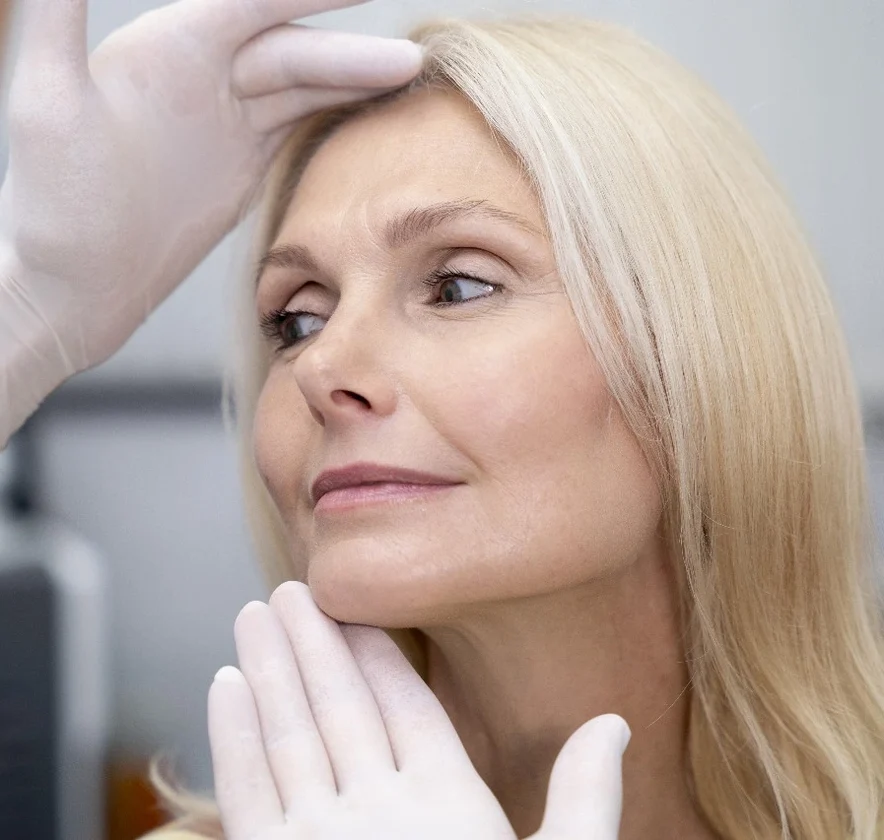
Surgeon examining a mature patient's face during a facelift consultation
Marking and Anesthesia

On the day of surgery Dr. Freeman marks the incision lines and the areas of the cheek, jowl and neck to be treated while you sit upright, so the plan follows how your face actually falls. The operation is done under anesthesia given by his anesthesia team and takes about four hours.

Incisions and the Three Layers

The incisions run from the temple into the hidden contours around the ear and back into the hairline, with a small one under the chin. Dr. Freeman releases and lifts the deep plane of the cheek and jowl, then treats the neck (platysma, fat and, when needed, the submandibular gland) before the skin is redraped.

Closing the Incisions

The skin is closed without tension, with fine sutures in front of the ear and staples hidden in the hair. You go home the same day with someone to look after you.

Mature woman touching her neck and jawline, the areas a triplanar facelift treats

Add-On Procedure
Lower Eyelid Surgery

Many patients have a lower lid blepharoplasty using Dr. Freeman’s SOOF lift technique in the same session as the triplanar facelift. It treats puffiness (bags) under the eyes and the hollow below the lower lid, and because the SOOF lift also raises the midface it adds to what the deep plane lift does for the cheek. Doing both together lengthens the recovery a little, and patients get one rejuvenation instead of two.

Mature woman in profile touching her neck during facelift recovery

Recovery After a Triplanar Facelift

You go home the same day and need an adult with you for the first three days. Expect swelling, bruising and tightness more than sharp pain; Dr. Freeman prescribes pain medication and antibiotics, and you sleep with your head elevated for the first week. Cold compresses help with swelling.

The first sutures come out on day six and the rest, with the staples, a week later. Bruising fades over two to three weeks and most patients are back at a desk job at two weeks; strenuous exercise waits until about six weeks. The preservation technique has shortened this timeline compared with Dr. Freeman’s earlier deep plane lifts.

Swelling keeps settling for two to three months and the final result shows at three to six months. The lift turns the clock back 10 to 15 years and you keep aging from there; most patients never need a second facelift, and those who do, often decades later, are usually candidates for the Signature Lift.

Candidates for a Triplanar Deep Plane Facelift

The triplanar lift is for established jowls, a blurred jawline and a loose or banded neck. Most of Dr. Freeman’s patients for it are between 50 and 75, but anatomy decides, not age, and for mild sagging he recommends the MiniTuck instead. Good candidates usually share these traits:

Smiling mature woman enjoying natural-looking facelift results

Benefits of the Triplanar Approach

The face is lifted from underneath and the skin is only redraped, so the hairline, earlobes and smile stay where they belong and nobody sees a “done” face.

The deep plane lift and the neck lift are done in the same four-hour session, so the jawline and neck match the lifted cheek instead of being treated years apart.

Because the deep layer carries the lift rather than the skin, results are often still visible decades later, and most patients never need a second facelift.

The preservation technique keeps more of the supporting ligaments and tissue intact: a safer dissection, less swelling and a faster return to normal life.

Triplanar Facelift Results from Dr. Freeman's Charlotte Patients

In the first video Dr. Freeman explains what a deep plane facelift is and who it is for. The second shows a 73-year-old Only Faces patient seven weeks after her deep plane facelift with submandibular gland shave. All 26 facelift-with-neck-lift cases are in the gallery, labeled with the post-op date.

What is a deep plane facelift? Dr. Freeman explains

73-year-old, 7 weeks after a deep plane facelift with SMG shave

Cost of a Triplanar Facelift in Charlotte

A Triplanar Deep Plane Preservation Facelift with neck lift at Only Faces costs $34,000 to $45,000. The range reflects how much neck work you need (liposculpture, platysma tightening, submandibular gland shave) and whether a SOOF lift lower blepharoplasty or CO2 laser resurfacing is added in the same session. You receive one written quote at your consultation; the lighter options are on our facelift page.

Triplanar Deep Plane Facelift: Questions Patients Ask

What does “triplanar” mean in this facelift?

Dr. Freeman’s deep plane facelift, done in three layers in one operation: the deep plane of the cheek and jowl, the neck (platysma, fat and, when needed, the submandibular gland) and the skin, which is redraped without tension. The preservation part keeps more of the supporting ligaments and tissue intact.

How is it different from a regular facelift?

A skin or SMAS facelift tightens the surface layers. The triplanar lift releases the ligaments, moves the deep layer as one unit and treats the neck at the same time, so it corrects real jowls and neck laxity and looks natural rather than pulled. For mild sagging Dr. Freeman recommends his MiniTuck or Signature Lift.

How much does a triplanar deep plane facelift cost in Charlotte, NC?

$34,000 to $45,000 at Only Faces, with the neck lift. Adding a lower blepharoplasty or CO2 resurfacing in the same session raises the total; you get a written quote after your consultation.

What are the downsides of a deep plane facelift?

It is a four-hour operation under anesthesia with about two weeks of social downtime, and it costs more than a lighter lift. Like any facelift it carries surgical risks, which Dr. Freeman goes through with you at the consultation. His preservation technique was developed to make the dissection safer and the swelling shorter.

How long is the recovery?

Home the same day with a helper for three days, sutures and staples out over the first two weeks, back to a desk job at about two weeks and to full exercise at six weeks. The final result shows at three to six months.

Who performs the triplanar facelift in Charlotte?

Dr. Sean Freeman, MD, FACS, a double board-certified facial plastic surgeon who has operated in Charlotte since 1988 and only operates on faces. He is one of the few surgeons in the United States who performs the preservation deep plane technique, and patients travel from across the country for it.

Can I combine it with eyelid surgery or a brow lift?

Yes. The SOOF lift lower blepharoplasty, Segmental Endoscopic Brow Lift and CO2 laser resurfacing are often done in the same session, which then takes four to five hours.

Serving Charlotte, Ballantyne and the Carolinas

Only Faces is at 11220 Elm Lane in south Charlotte, between Ballantyne and Pineville, a short drive from SouthPark, Matthews, Fort Mill and Rock Hill. Patients also travel from Huntersville, Lake Norman, Concord, Gastonia, Hickory and Winston-Salem; Dr. Freeman explains how out-of-town patients are managed in his video on the subject, and the office coordinates pre-op testing and follow-up around the drive. Call (704) 543-1110 or book online.

Why Only Faces is
the Best Destination for
a Triplanar Facelift in Charlotte?

Dr. Sean Freeman, MD, FACS, is double board-certified by the American Board of Otolaryngology (1987) and the American Board of Facial Plastic and Reconstructive Surgery (1991). He completed his facial plastic surgery fellowship at Washington University in St. Louis under J. Regan Thomas, MD, and has operated in Charlotte since 1988, with hospital appointments at Atrium Health Carolinas Medical Center, Atrium Health Mercy and Novant Health Presbyterian. He has served on the editorial boards of Archives of Facial Plastic Surgery and Facial Plastic Surgery Clinics of North America, and Only Faces holds a 4.8-star rating across 140 Google reviews.

Dr. Freeman’s published work on rejuvenation of the midface is the basis of how he lifts the malar fat pads during the deep plane lift, and he is one of only a handful of American surgeons who perform the preservation deep plane technique. Patients fly in from across the country for it, and every case in our gallery was photographed in our office.

Mature woman with lifted, refreshed facial contours
Only Faces
About