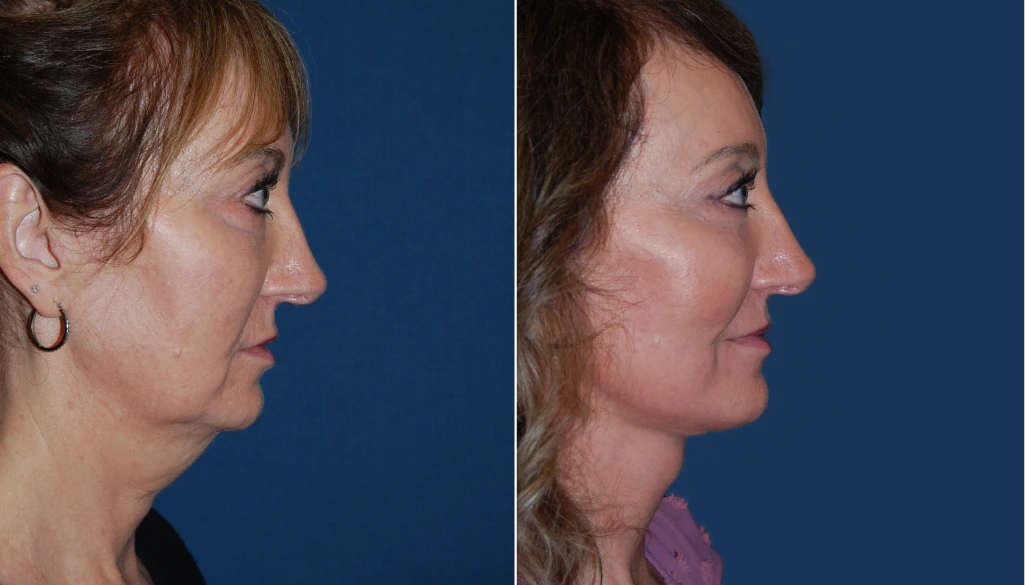
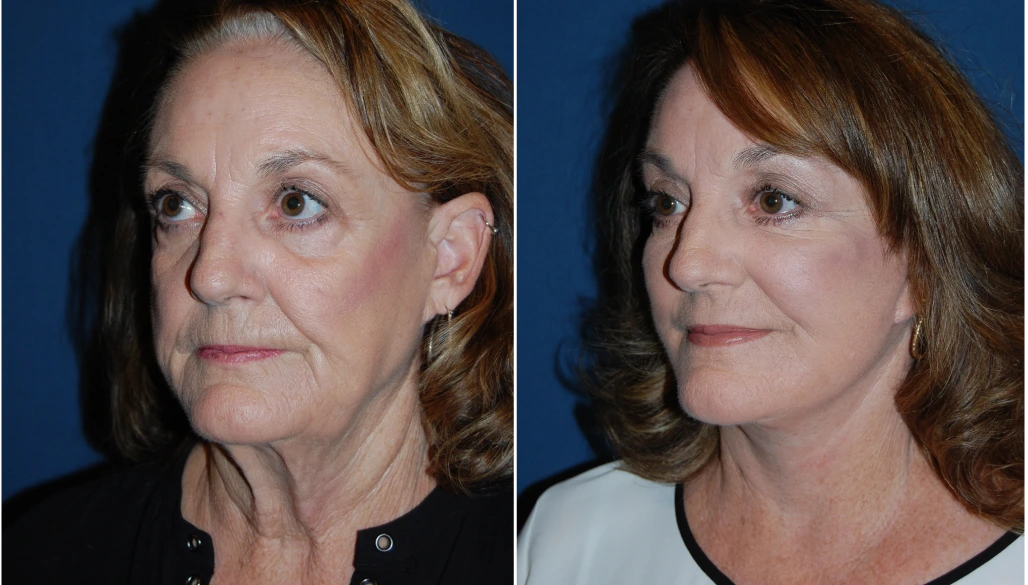
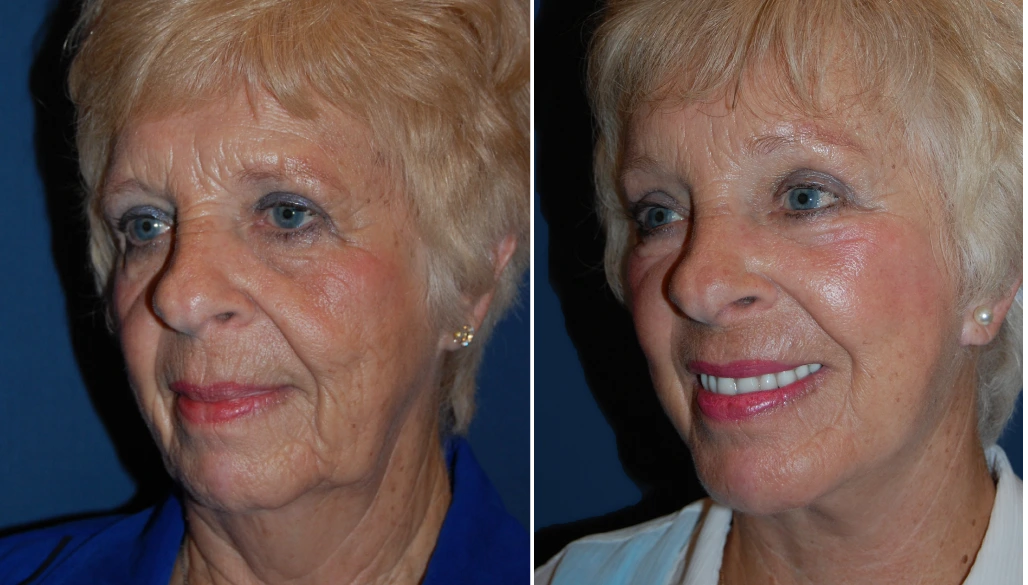
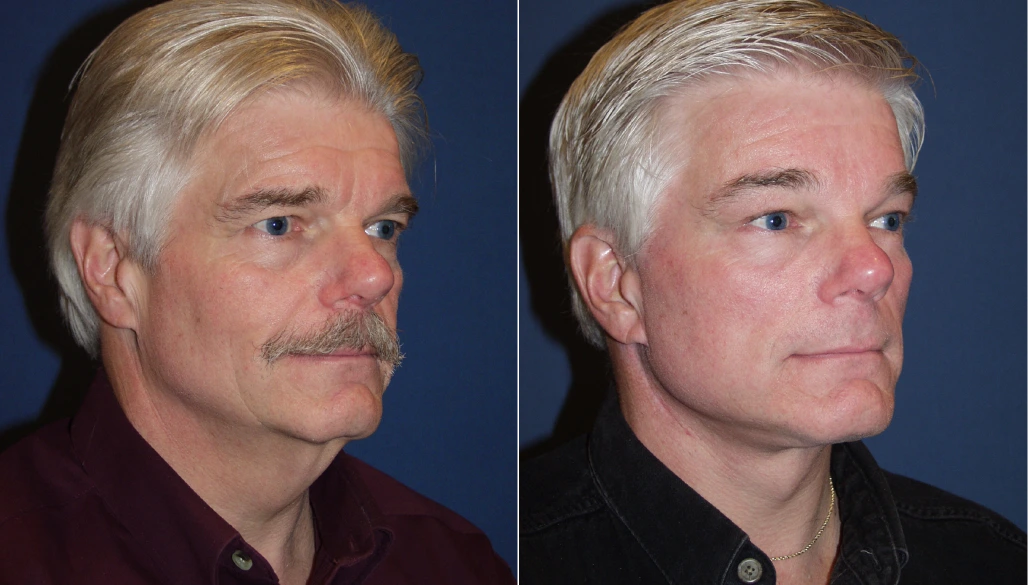
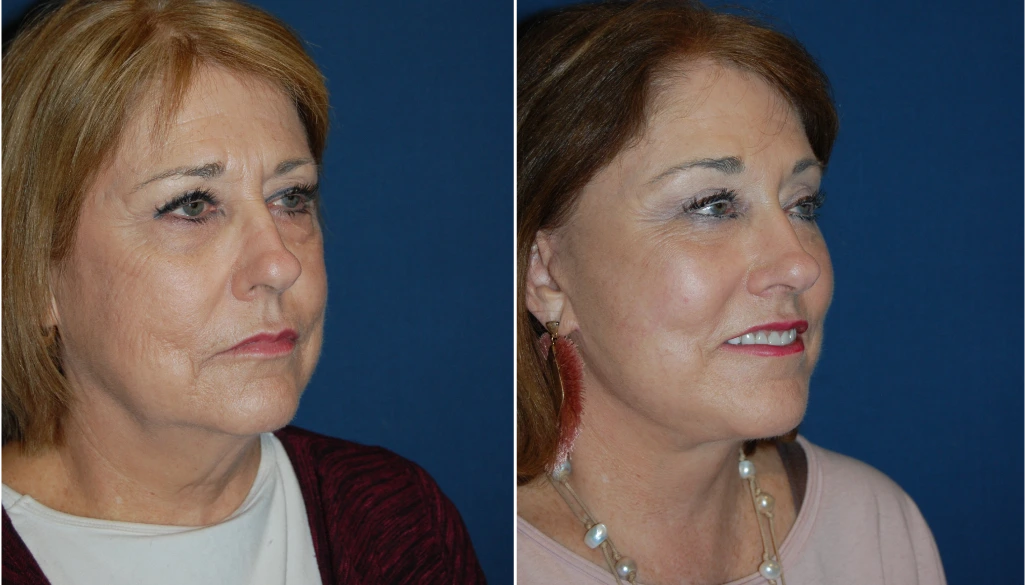
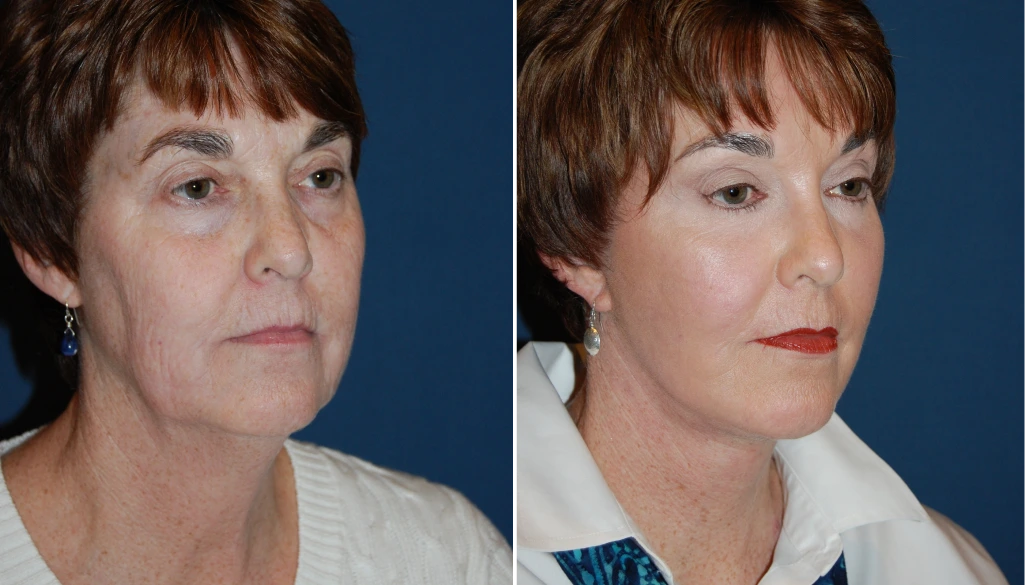
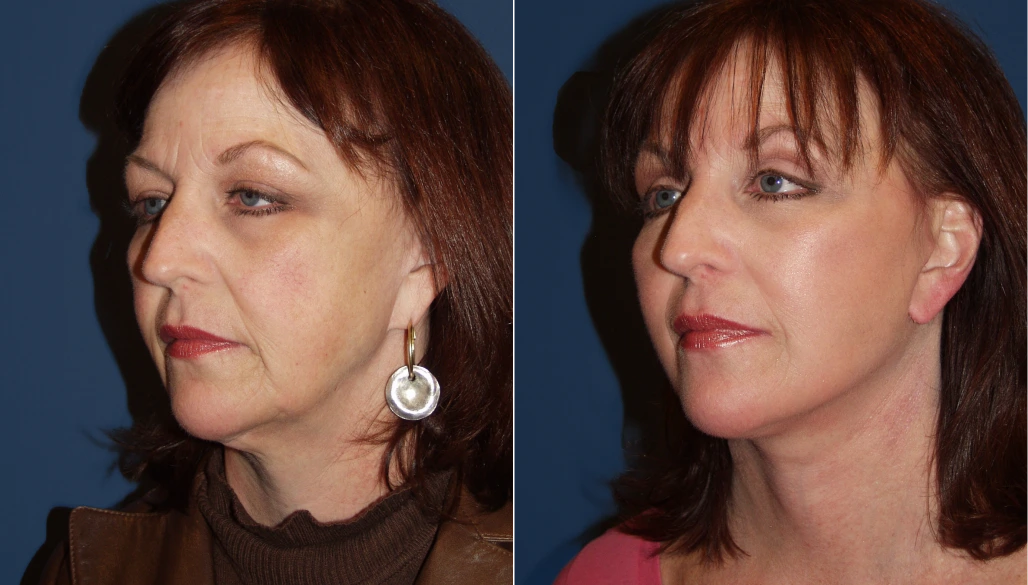

Dr. Sean Freeman has performed deep plane facelifts in Charlotte for more than 20 years, lecturing and publishing on the technique long before it became a buzzword, and he now performs the Preservation Deep Plane Facelift, one of the few surgeons in the United States to offer it. The deep plane lift repositions the deeper layer of the face and neck as one unit instead of pulling skin, which is why his patients do not look “done.” It is paired with a neck lift (platysma tightening, liposculpture of the jawline and, when needed, shaving the submandibular gland) in the same four-hour operation.
A deep plane facelift works beneath the SMAS, the muscular layer under the skin, releasing the ligaments that tether the cheek and jowl and lifting the whole composite layer back to where it sat a decade earlier. Because the skin is not stretched to do the lifting, the result lasts longer and the hairline, earlobes and smile stay natural. Dr. Freeman’s version adds his “three-layer” approach to the neck, and his preservation modification keeps more of the supporting tissue intact for a safer operation, less swelling and a faster recovery. It is the procedure most of our Charlotte patients over 50 choose when they want their jawline and neck back, and it is different from the lighter MiniTuck facelift and the Signature Lift for younger faces.
Preparation for this procedure begins with an in-depth consultation with Dr. Freeman. During the meeting, the patient’s medical history is reviewed, and Dr. Freeman evaluates skin elasticity, bone structure, and problem areas to determine the appropriate techniques for that individual. Dr. Freeman discusses realistic outcomes and explains the details of the procedure, risks and side effects, and post-operative care requirements. Before surgery, patients may need some tests to ensure that they do not have health conditions that might affect anesthesia or healing. They should also avoid smoking, certain vitamins and medications, alcohol, and blood thinners for some time, as recommended by Dr. Freeman. Clearance from a primary care physician may be necessary for some individuals, depending on their health condition and age. Patients should also arrange for transportation and help during the recovery period at home.
The facelift with neck lift procedure is performed under general anesthesia, so the patient is fully asleep and unaware during the surgery. We use the best medication and evidence-based practices to ensure a smooth transition into this unconscious state. Dr. Freeman and his anesthesia team closely monitor the patient’s vital signs during the procedure.
Dr. Freeman makes incisions along the hairline that extend from the ear to the temples and the hairline behind the ear. A small cut beneath the chin is also used for liposculpture to remove extra fat in the neck area and release the mandibular ligament.
Our neck lift procedures involve tightening the platysma muscle. This thin, sheet-like tissue often separates and sags with age, contributing to the appearance of neck bands. Dr. Freeman uses a technique called platysmaplasty, where the muscle edges are brought together and sutured in the midline to create smoother, more youthful contours when this is necessary.
Some patients can also benefit from shaving the caudal portion of the submandibular gland. This procedure is done when the gland is visible in the upper lateral neck. Dr. Freeman was the first one to publish this procedure and has been performing this maneuver for over twenty years. Removing a portion of this gland does not inhibit the patient’s ability to swallow.
The malar fat pads in the cheek area tend to descend with age, contributing to a hollow or sunken appearance. Dr. Freeman can move these fat pads to a more youthful position during his preservation deep plane lift. His technique helps restore volume in the cheeks and creates a more balanced look in the midface region.
Finally, the incisions are carefully closed using fine sutures in the skin and staples in the hair.. Dr. Freeman ensures that the skin lies smoothly and naturally over the newly contoured facial structures. Surgical drains may sometimes be placed for a few days to prevent fluid accumulation under the skin.

Recovery from our Preservation Deep Plane Facelift typically takes several weeks. Immediately after surgery, patients can expect swelling, bruising, and some discomfort. They return home the same day and should have someone to assist them for the first three days.
During the first week, all patients are advised to keep their heads elevated, even while sleeping, to minimize swelling. Cold compresses can help reduce inflammation and discomfort. Pain medication and antibiotics will be prescribed to manage aches and prevent infection.
The first set of sutures will be removed on day six. All sutures are then removed a week later. Most patients can resume light activities after a short healing period, but they should avoid strenuous exercise for at least a month. Bruising typically subsides within 2-3 weeks.
Follow-up appointments with Dr. Freeman are crucial to monitor the healing process. Patients are often advised to protect their skin from sun exposure and to follow a gentle skincare routine during recovery. Full results of the facelift and neck lift become apparent as swelling continues to subside, typically within 3-6 months after surgery.
It is important to note that individual recovery experiences may vary, so patients should closely follow Dr. Freemans’ post-operative instructions for optimal healing and results.

Individuals with sagging skin along the jawline, lower face, and neck areas. They may have jowls, drooping cheeks, and banding or wrinkling. Our procedures remove excess skin and lift the remaining tissues.

People with unwanted fat deposits or loose muscle tone that cannot be addressed through diet, exercise, or non-surgical means. Our procedures greatly improves the double chin and define facial contours.

Patients who experience early signs of aging and want to address them proactively before they become too pronounced. Combining a facelift with a neck lift can help rejuvenate the appearance.

Older individuals with advanced signs of aging who want to achieve a more refreshed, youthful look through surgery. Our advanced techniques can significantly turn back the clock.

Patients in overall good health without medical conditions that could impair healing. Ideal candidates do not smoke and have realistic expectations about the potential improvements.
In the first video Dr. Freeman explains what a deep plane facelift is and who it is for. The second shows a 73-year-old Only Faces patient seven weeks after her deep plane facelift with submandibular gland shave. Many more cases are in the gallery, grouped by procedure and labeled with the post-op date.
What is a deep plane facelift? Dr. Freeman explains
73-year-old, 7 weeks after a deep plane facelift with SMG shave
A Preservation Deep Plane Facelift with neck lift at Only Faces costs $34,000 to $45,000. That is an all-inclusive price: Dr. Freeman, his anesthesia team, the operating room, the overnight supplies and every follow-up visit. The range reflects the extent of neck work (liposculpture, platysma tightening, submandibular gland shave) and whether a SOOF lift lower blepharoplasty or CO2 laser resurfacing is added in the same session, which many patients do. You receive a written quote at your consultation.
$34,000 to $45,000 at Only Faces, all-inclusive, with the neck lift. Adding a lower blepharoplasty or CO2 resurfacing in the same session raises the total; you get a written quote after your consultation.
For patients with real jowls and neck laxity, yes: it lifts the deeper tissue instead of pulling skin, so it lasts longer and looks natural. For mild sagging Dr. Freeman recommends his MiniTuck or Signature Lift instead, and he will tell you which at the consultation.
Most of Dr. Freeman’s deep plane patients are between 50 and 75, but the decision is made on anatomy, not age. His gallery includes patients in their 40s and in their 70s.
You go home the same day with someone to help for the first three days. Sutures and staples come out over the first two weeks, most patients are back to a desk job at two weeks and to full exercise at six weeks. Dr. Freeman’s preservation technique has shortened this timeline compared with his earlier deep plane lifts.
A refinement of the deep plane lift that keeps more of the supporting ligaments and tissue intact while still repositioning the deep layer. It is a safer dissection with less swelling, and Dr. Freeman is one of the few surgeons in America who performs it.
Yes, and most patients do. Dr. Freeman’s SOOF lift lower blepharoplasty and his Segmental Endoscopic Brow Lift, both procedures he developed, are commonly done in the same session.
Only Faces is at 11220 Elm Lane in south Charlotte, between Ballantyne and Pineville, a short drive from SouthPark, Matthews, Fort Mill and Rock Hill. Patients also travel from Huntersville, Lake Norman, Concord, Gastonia, Hickory and Winston-Salem; Dr. Freeman explains how out-of-town patients are managed in his video on the subject, and the office coordinates pre-op testing and follow-up around the drive. Call (704) 543-1110 or book online.
Dr. Sean Freeman, MD, FACS, is double board-certified by the American Board of Otolaryngology (1987) and the American Board of Facial Plastic and Reconstructive Surgery (1991). He completed his facial plastic surgery fellowship at Washington University in St. Louis under J. Regan Thomas, MD, and has operated in Charlotte since 1988, with hospital appointments at Atrium Health Carolinas Medical Center, Atrium Health Mercy and Novant Health Presbyterian. He has served on the editorial boards of Archives of Facial Plastic Surgery and Facial Plastic Surgery Clinics of North America, and Only Faces holds a 4.8-star rating across 140 Google reviews.
Dr. Freeman’s published work on rejuvenation of the midface (Facial Plastic Surgery Clinics of North America, 2005 and 2018) is the basis of how he lifts the malar fat pads during a deep plane lift. He also offers the Preservation Deep Plane technique, which fewer than a handful of American surgeons perform. Patients fly in from across the country for it; see the gallery of 26 facelift-with-neck-lift cases and 70 facelift cases, all photographed in our office.