Medically reviewed by Dr. Sean Freeman, MD, FACS, facial plastic surgeon in Charlotte, NC.

Surgeons prefer the Segmental Endoscopic Brow Lift because it allows for precise, individualized lifting of different brow segments through small hidden incisions, resulting in natural, predictable outcomes without the over-lifted or surprised look often associated with traditional brow lifts.
The technique was invented and pioneered by Dr. Sean Freeman, a double board-certified facial plastic surgeon in Charlotte, NC, who now teaches it to other surgeons.
This advanced procedure lifts and repositions the eyebrows using an endoscope – a small camera on a thin tube that lets the surgeon see and work through short incisions hidden in the hair.
The word that matters most is segmental. Traditional brow lifts treat the forehead as one sheet of tissue and raise all of it together. Dr. Sean Freeman’s technique treats the brow as separate segments – inner (medial), middle, and outer (lateral) – and adjusts each one according to what that specific area needs.
Brows almost never age evenly. Most people lose height at the tail of the brow first, while the inner brow stays put or sits too low from years of frowning. Lifting everything equally exaggerates the problem; lifting only where lift is needed corrects it.
Dr. Sean Freeman grades each patient’s forehead aging before surgery and places them into one of five categories, each corresponding to a different plan:
Lateral brow lift – heaviness limited to the outer brow with a normal inner brow
Aggressive lateral lift – more significant outer brow descent
3/4 lift – lift across most of the brow, tapering toward the center
Aggressive 3/4 lift – a stronger version of the same pattern
Full brow lift – lift across the entire brow
There is also an asymmetrical brow lift option for patients whose two sides sit at genuinely different heights – far more common than most people realize.
This is the central advantage. When the brow is graded before surgery and each segment is planned separately, the surgeon knows what they intend to achieve in each zone before the first incision.
A millimeter or two of difference in brow height changes your entire expression. Precision is not a luxury here – it is the whole point, and it is what avoids the “wind-tunnel” or permanently surprised look.
Short incisions placed within the hair are, for practical purposes, invisible once healed. There is no ear-to-ear scar and no shifted hairline. Patients who wear their hair pulled back are usually the most relieved by this.
Less tissue disruption generally means a smoother recovery, with less swelling, bruising, and discomfort than a traditional open lift. Swelling around the forehead and eyes is typical in the first week or two and settles progressively; most patients return to normal activities more quickly. Dr. Sean Freeman’s surgery preparation guidance walks patients through what to expect.
Numbness and itching across the scalp are among the most common long-term complaints after traditional coronal brow lifts. Because the endoscope magnifies the sensory nerves running through the forehead, they can be identified and worked around rather than crossed blindly. Better sensory preservation is one of the quieter reasons surgeons favor this approach.
The goal of a well-done brow lift is that nobody can tell you had one. People should read you as awake and approachable, not startled.
Segmental lifting protects the natural arch. A brow too high in the middle looks surprised; a brow flat across looks heavy. Restoring the correct shape, not just the correct height, preserves your real expressions – surprise, concern, happiness – without the constant look of being tired, angry, or worried.
For a surgeon, the appeal is structural. A grading system that sorts patients into five defined categories turns an intuitive judgment call into a repeatable, fully customized plan. It removes the guesswork of older techniques by defining where to lift and how much before entering the operating room. Dr. Sean Freeman teaches this framework to other surgeons – a meaningful endorsement, since a method that cannot be taught cannot be reliably reproduced.
Hidden incisions, a preserved hairline, better preserved sensation, and a shorter recovery all reduce friction for patients. Add the ability to combine the brow lift with eyelid surgery, a deep plane facelift, or rhinoplasty in one operation, and it becomes clear why this is a foundational tool in facial rejuvenation.
Dr. Sean Freeman has practiced facial plastic surgery for decades and works exclusively on the face. Learn more about the doctor or hear him discuss his methods on the podcasts.
The Segmental Endoscopic Brow Lift earns its reputation by treating the brow as several distinct segments rather than one flat plane, using small hidden incisions and magnified visualization to lift precisely where lift is needed. The result: a natural brow shape, preserved sensation, no visible scarring, and a more comfortable recovery.
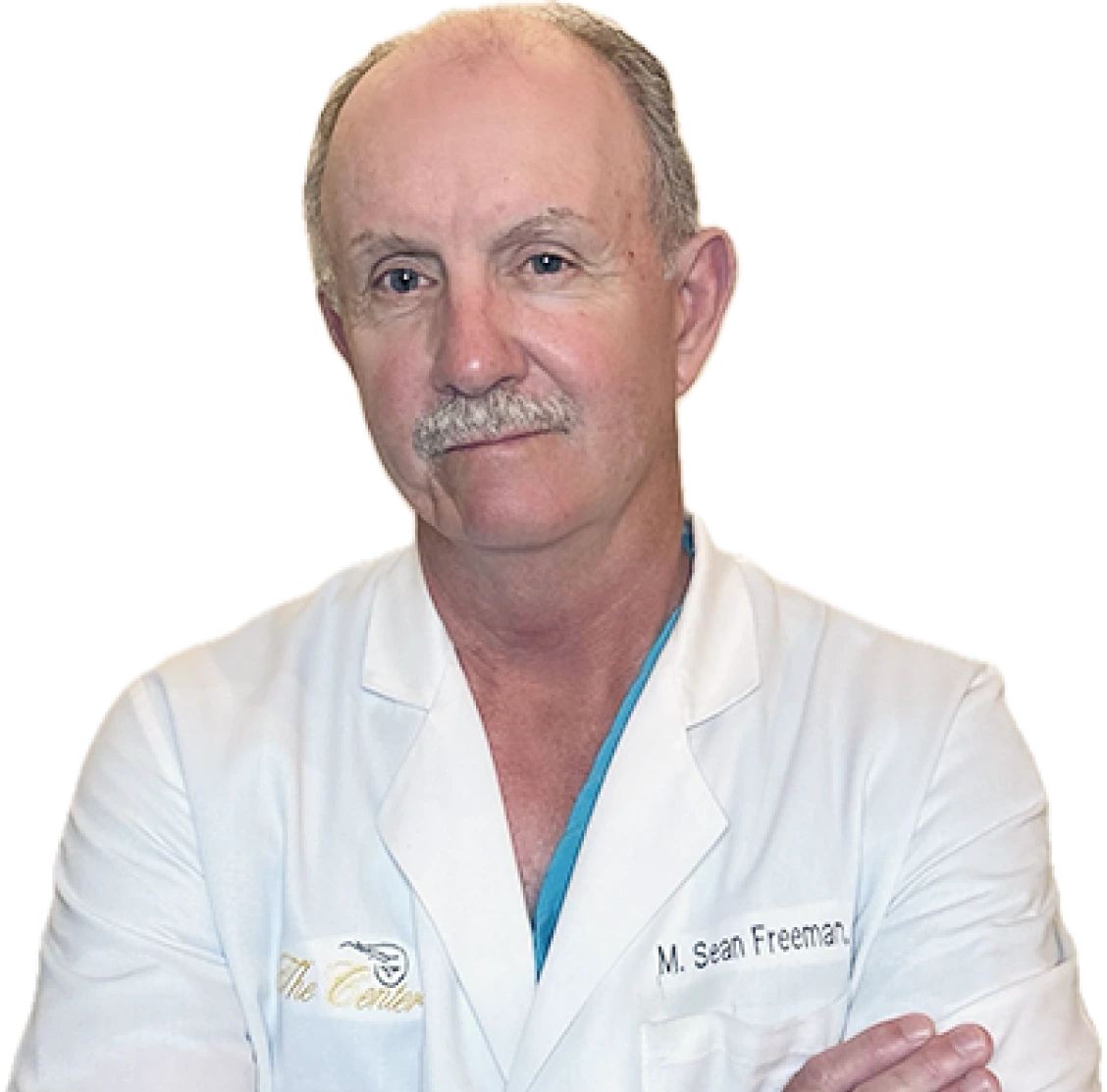
About the Author
Dr. Sean Freeman MD, FACS
August 18, 2026
