Medically reviewed by Dr. Sean Freeman, MD, FACS, facial plastic surgeon in Charlotte, NC.

The main difference between these procedures is precision. A traditional brow lift raises the entire forehead in one uniform motion through a long incision, while the Segmental Endoscopic Brow Lift – a technique invented and perfected by Dr. Sean Freeman – lifts specific segments of the brow through small hidden incisions, using an endoscope for guidance. Each part of the eyebrow can be adjusted by a different amount, so the result tends to look more natural and more predictable than a traditional lift. If your brows have dropped, your upper eyelids feel heavy, or people keep telling you that you look tired or angry when you feel fine, understanding these two approaches will make your consultation far more productive.
Dr. Sean Freeman is a double board-certified facial plastic surgeon with decades of experience who works exclusively on the face. He developed the segmental technique to overcome the limitations of older methods.
The traditional or “coronal” brow lift is the original approach and has been performed for decades. It uses a single long incision across the scalp, from roughly ear to ear, along or just behind the hairline. Through that opening, the surgeon releases the forehead tissue, lifts it, removes a strip of scalp and excess skin, and closes.
Because the lift is applied to the whole forehead at once, elevation is largely uniform – the center of the brow and the outer tail rise together. Most people don’t age evenly across the brow; the outer third usually drops more than the center. Lift everything the same amount, and you can end up with a raised, surprised-looking central brow while the outer tail is still heavy.
The long incision also means more tissue disruption between the incision and the brow, which affects sensation and swelling.
The Segmental Endoscopic Brow Lift is a technique Dr. Sean Freeman invented and refined over more than 15 years of use. Rather than treating the forehead as one unit, it divides the brow into segments and treats each one according to what it actually needs.
The process begins before surgery. Each patient’s brow is classified into one of five degrees of forehead aging, and that classification determines which of the five segmental variations Dr. Sean Freeman performs. He also assesses eyebrow position, skin thickness, and brow depressor strength – a patient with strong depressors and thick skin needs a different plan than one with weak depressors and thin skin.
An endoscope – a tiny camera on a thin tube – provides magnified visualization through several small incisions hidden in the hair, each typically less than an inch long, so the release and fixation happen under direct view rather than blindly.
This is the clearest dividing line. The traditional lift is an “open” procedure requiring one long coronal incision and elevation of a large tissue flap. The Segmental Endoscopic Brow Lift uses several small incisions behind the hairline, with the endoscope carrying the light and camera to the working area.
Less tissue lifted means less disruption to the nerves, blood supply, and lymphatic drainage of the forehead.
Both procedures are performed under local or general anesthesia for patient comfort. The traditional coronal lift generally takes longer, largely because of the size of the incision, the flap elevation, the strip of scalp removed, and the closure required. The endoscopic technique is typically more efficient in the operating room.
Traditional lift: one continuous scar across the scalp. Usually hidden by hair, but long – and it can become noticeable in patients with fine hair, thinning hair, or a receding hairline. Pulling hair back or up can expose it.
Segmental Endoscopic Brow Lift: several short incisions concealed within the hair, virtually undetectable once healed. Because each is small and separated from the others, there’s no single long line running across the head – a meaningful advantage for anyone who wears their hair short or pulled back.
Recovery tracks with how much tissue was moved. After a traditional coronal lift, patients generally experience more swelling and bruising across the forehead and around the eyes, more scalp tightness, and a longer stretch before they feel presentable.
The endoscopic technique typically involves less swelling, bruising, and discomfort, plus a faster return to normal activity. Bruising still happens, and the forehead still feels tight for a while – but the overall arc is shorter.
A traditional lift produces real, powerful elevation across the entire forehead – nobody disputes that. The question is whether the elevation lands where you want it.
Because different segments can be lifted by different amounts, Dr. Sean Freeman can raise the outer brow more than the center when that’s what the face needs – for example, lifting only the outer brows for a refreshed look without altering the entire forehead. That’s how you avoid the overly arched, permanently startled appearance.
Numbness of the forehead and scalp is a well-known aftereffect of brow lift surgery, and it relates to how much sensory nerve tissue is crossed or stretched.
The Segmental Endoscopic Brow Lift works through small openings with magnified visualization, allowing more careful navigation around those structures. Most patients in either case notice altered sensation that improves over time, but the smaller-access approach involves a smaller affected area.
This is where technique choice shows on your face for years. A uniformly lifted forehead can flatten natural brow shape and raise the hairline. The segmental method preserves brow character – the arch, the taper, the slight natural asymmetry that makes a face look like yours.
Dr. Sean Freeman teaches this technique to other surgeons because the outcome of surgery depends on pre-surgical classification and judgment, not just instruments. With the right technique and surgical skill, patients look rested and rejuvenated after the procedure, not permanently surprised.
The segmental endoscopic approach tends to suit patients who:
Have uneven brow descent, with the outer brow heavier than the center
Have mild to moderate brow ptosis (sagging)
Want a natural, customized change rather than a dramatic elevation
Have short hair, thin hair, or wear their hair pulled back
Have noticeable brow asymmetry between the two sides
Prefer a shorter recovery and smaller incisions
A traditional lift may still be considered when:
There is very advanced forehead aging, significant laxity, and skin excess across the entire brow line
Extensive access to the forehead is required
Prior surgery or scarring makes the endoscopic route impractical
Given the advancements of the segmental technique, the traditional lift is now a less common choice – and the decision comes out of an exam, not a checklist.
When weighing a Segmental Endoscopic Brow Lift vs. traditional lift, the difference comes down to precision versus uniformity. The traditional coronal lift raises the whole forehead through one long scalp incision. The Segmental Endoscopic Brow Lift, invented by Dr. Sean Freeman in Charlotte, NC, classifies each patient’s forehead aging into one of five categories and lifts individual brow segments by different amounts through small hidden incisions.
The result: less swelling, shorter recovery, less conspicuous scarring, preserved natural expression, and better control over brow shape. An in-person or virtual evaluation with Dr. Sean Freeman is the way to find out which approach fits your face.
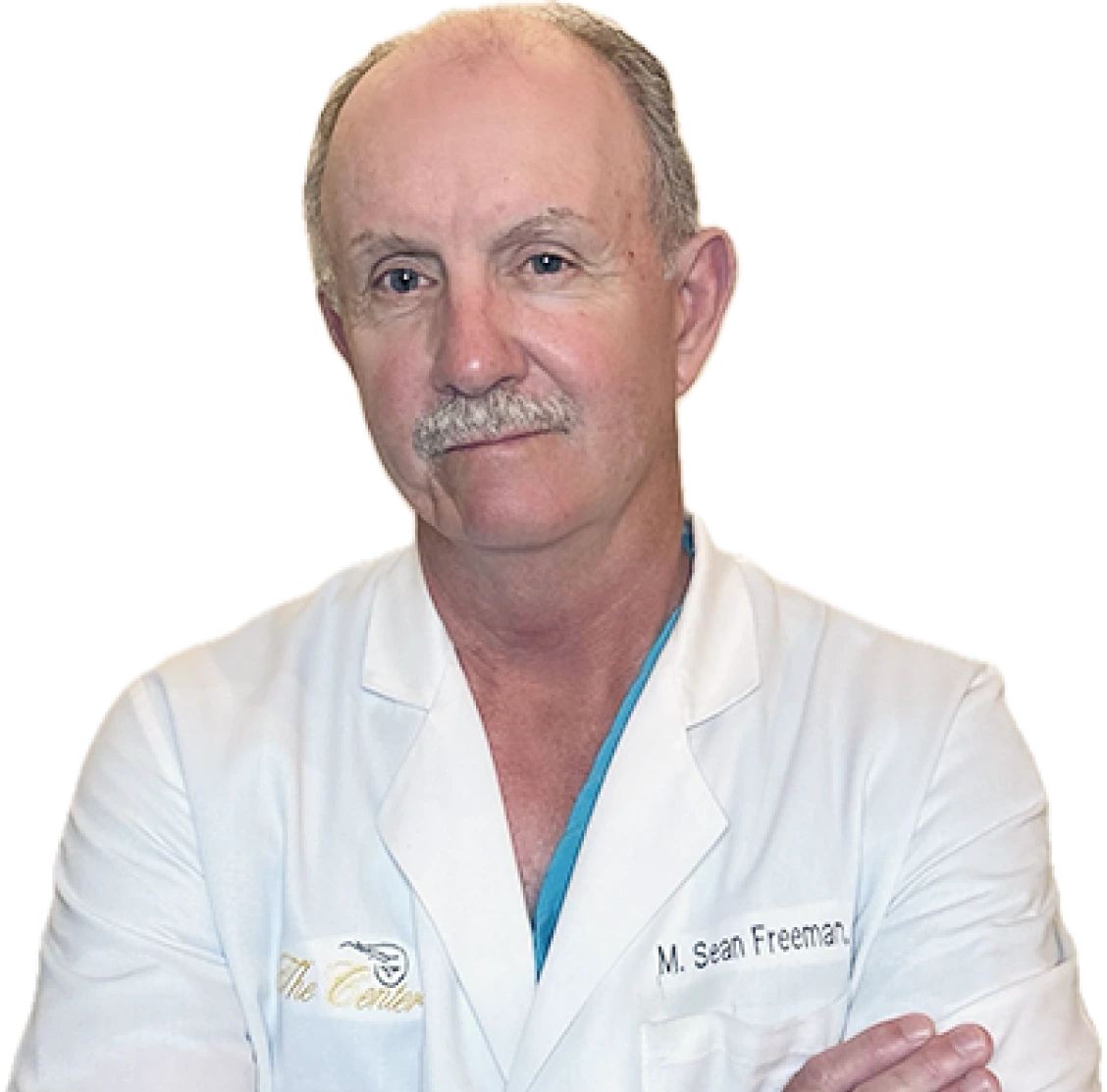
About the Author
Dr. Sean Freeman MD, FACS
August 18, 2026
