There is no fixed limit on the number of facelifts a person can have. Many patients need only one, and those who return usually do so many years later for a smaller procedure rather than a full repeat. When patients ask us "How Many Facelifts Can You Have," the honest answer depends on how your face ages after the first lift and how that first lift was done. A lift that repositions deeper tissue gives you more options later than one that simply pulls skin tight.
This guide explains what shapes that answer, what a second facelift involves, and what to consider before you decide.
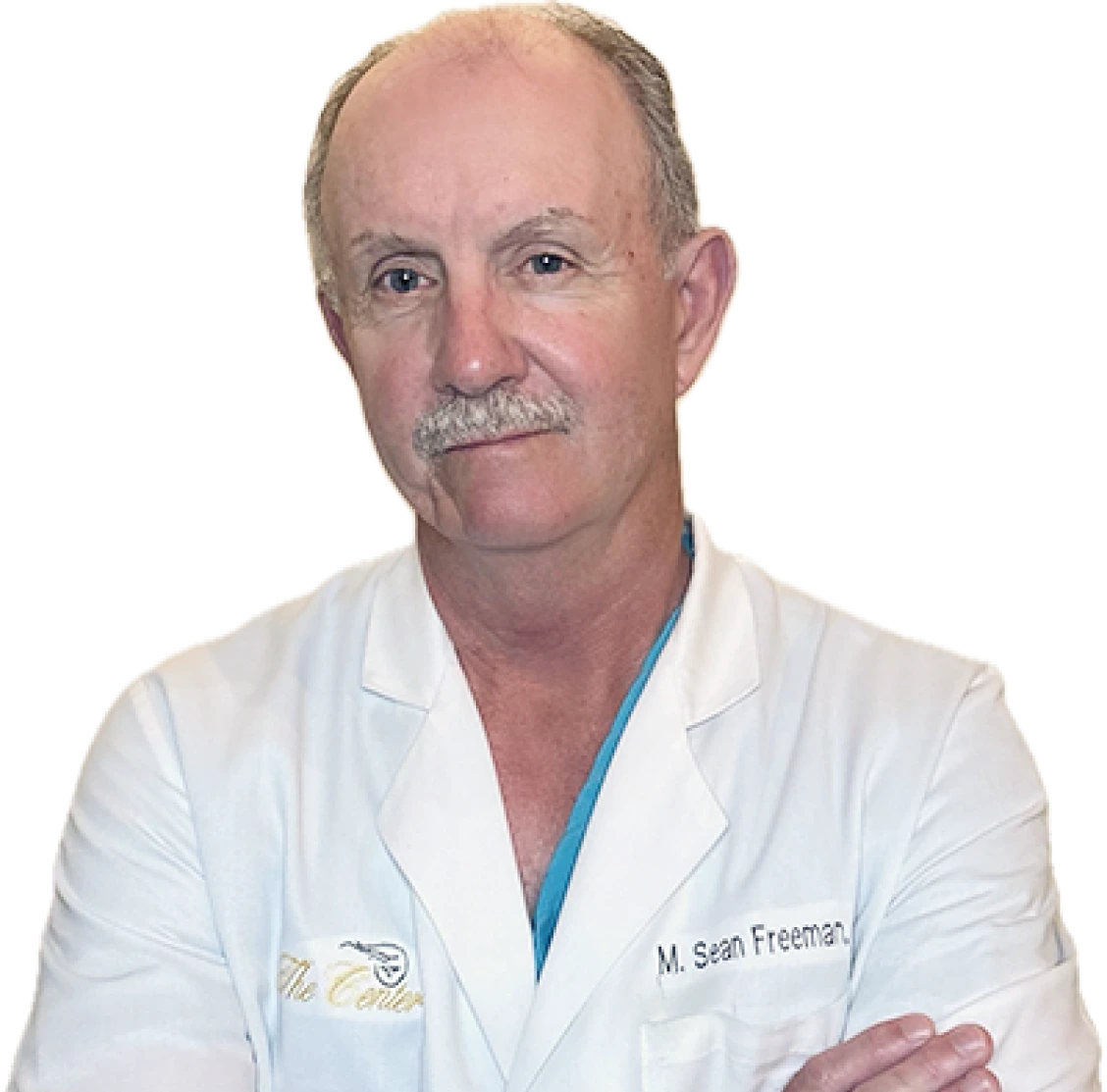
A facelift treats sagging in the lower face, jawline and neck. Dr. Sean Freeman, a double board-certified facial plastic surgeon, has performed facelifts since 1988 and operates only on faces. His approach repositions the deeper layer of the face and neck as one unit rather than pulling on the skin. This is why his patients do not look stretched or "done."
That distinction matters when you think about future surgery. Skin that was pulled tight during a first facelift has less to give the second time. Deeper tissue that was lifted and supported tends to age more naturally, which leaves room for a lighter touch later.

We offer several facelift operations, and Dr. Sean Freeman will tell you which one your anatomy needs. You can read about each on our Facelift.
The Preservation Deep Plane Facelift with neck lift is for established jowls and neck laxity. Dr. Sean Freeman has performed deep plane facelifts for more than 20 years and has lectured and published on the technique.
The Triplanar Facelift is the most complete facelift he performs. It treats the cheek and jowl at the deep plane and addresses the neck in the same operation. His preservation approach keeps more of the face’s supporting tissue intact, and he is one of the few surgeons in the United States who performs it. It also includes the SOOF lift Blepharoplasty, a technique Dr. Sean Freeman pioneered.
The MiniTuck facelift is a lighter operation for mild to moderate sagging.
The Signature Lift is a procedure Dr. Sean Freeman developed and has improved over time. It suits younger patients who do not need a deep plane facelift. It is also designed for patients whose earlier facelift is beginning to show new signs of aging.
Most patients have one major facelift. Some choose a second procedure years later when gravity and time start to show again. A third surgery is far less common and is usually a smaller, targeted procedure.
The second procedure is often not a full repeat. Patients who had a deep plane facelift or a facelift with neck lift may only need a Signature Lift to refresh the neck and jowl area when new aging appears. This keeps the overall number of large operations low.
Several factors shape how many facelifts make sense for you:
Because these vary so much from person to person, there is no single number that applies to everyone.
A second facelift is a different operation from a first one. The tissue has already been treated, so the surgeon needs to understand what was done before and how the face has changed since. Planning starts with a careful exam of your current anatomy rather than a standard plan.
Experience matters here. Dr. Sean Freeman has 30 years in facial plastic surgery and trains fellow surgeons in his techniques. That background helps when a patient arrives with a face that has already had surgery, whether the first facelift was done in our office or somewhere else.
A well planned second procedure can restore a younger looking neck and jowl area without a stretched appearance. The goal stays the same as the first time: lift from underneath so nothing looks pulled.
How long results last depends on the factors above. Patients whose first lift repositioned the deeper layer often find a lighter procedure is enough the second time. This is the main reason we focus on deep plane techniques from the start. A strong foundation gives you more choices later.
Repeat surgery becomes too much when the goal shifts from looking refreshed to looking tight. Many patients who look "operated on" have had skin pulled again and again. More surgery will not fix that look.
Dr. Sean Freeman will tell you plainly which operation your anatomy needs. Sometimes that is a smaller procedure than you expected. Sometimes it means waiting. A good plan protects the natural look you came in wanting.
Each surgery deserves the same level of preparation as the first. Your health, your medications and your recovery plan should all be reviewed again, even if your first facelift went smoothly. Our preparing for surgery page covers what patients should know before any procedure.
Timing also matters. Spacing procedures well apart gives the face time to settle, and it gives you a clear picture of how your results are aging before you decide on more.
Non-surgical treatments cannot lift jowls or tighten a loose neck, but they can help maintain your results between surgeries. We offer:
These options can delay the point when another facelift feels necessary.
Not every sign of aging calls for another facelift. Targeted procedures often handle the specific area that has changed:
Combining a smaller procedure with non-surgical care keeps the number of major operations low.
Your consultation is with Dr. Sean Freeman. He will examine your face and neck, review any past surgery, and talk with you about the changes that bother you most. From there, he will recommend the operation that fits your anatomy, or a smaller option if that serves you better.
You leave knowing which procedure makes sense, why it fits your face, and what results to expect. You can learn more about his background on our about the doctor page.
Bring these questions to your visit:
Clear answers to these questions will help you make a confident decision.
How Many Facelifts Can You Have comes down to your anatomy and the quality of your first lift. There is no set limit. Many patients need one facelift and, years later, a lighter procedure such as the Signature Lift. A deep plane approach that lifts from underneath keeps more options open and helps you avoid a pulled look over time.