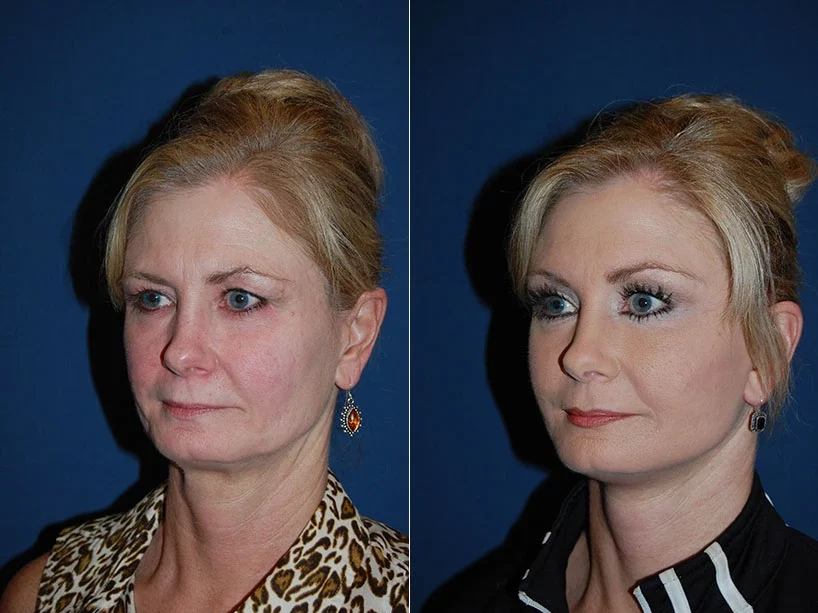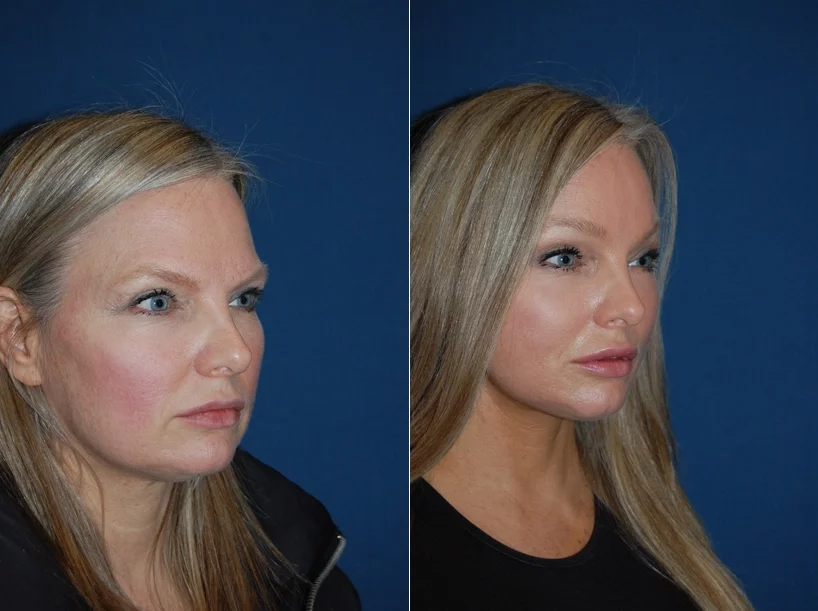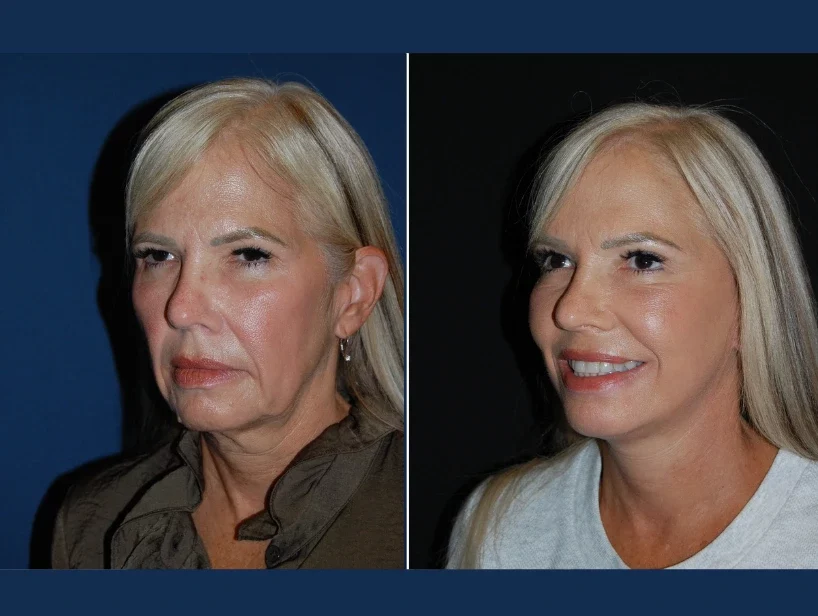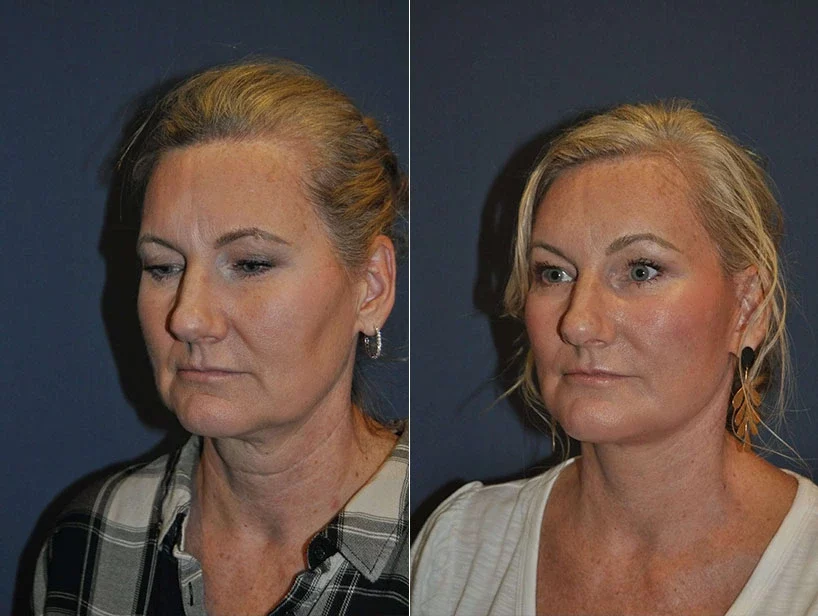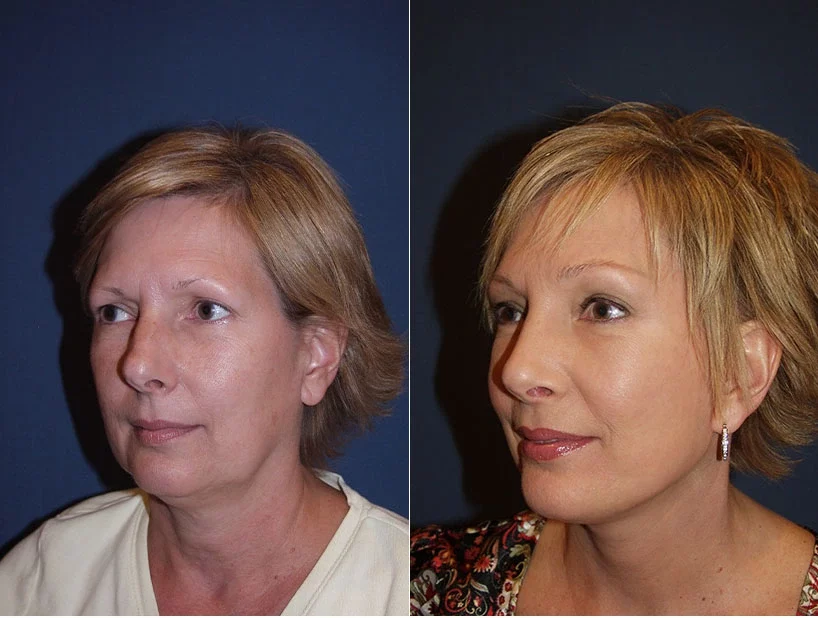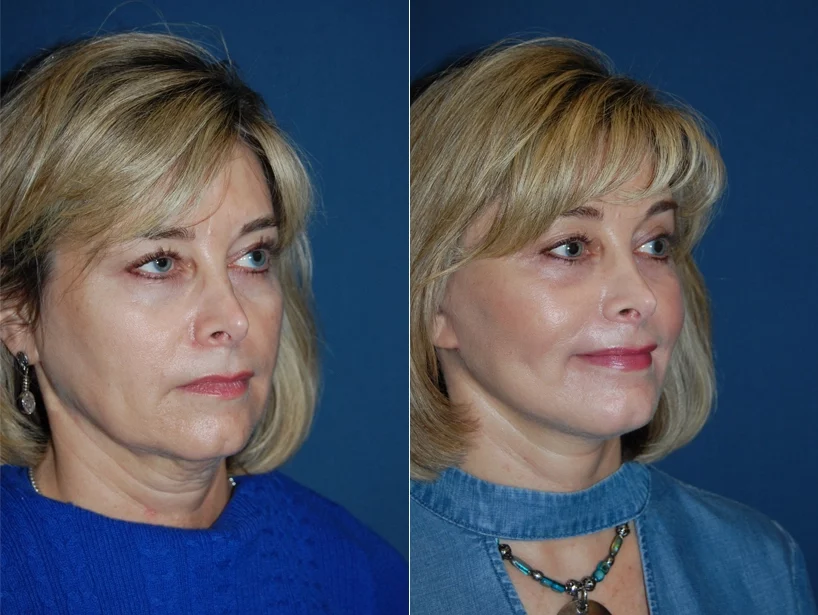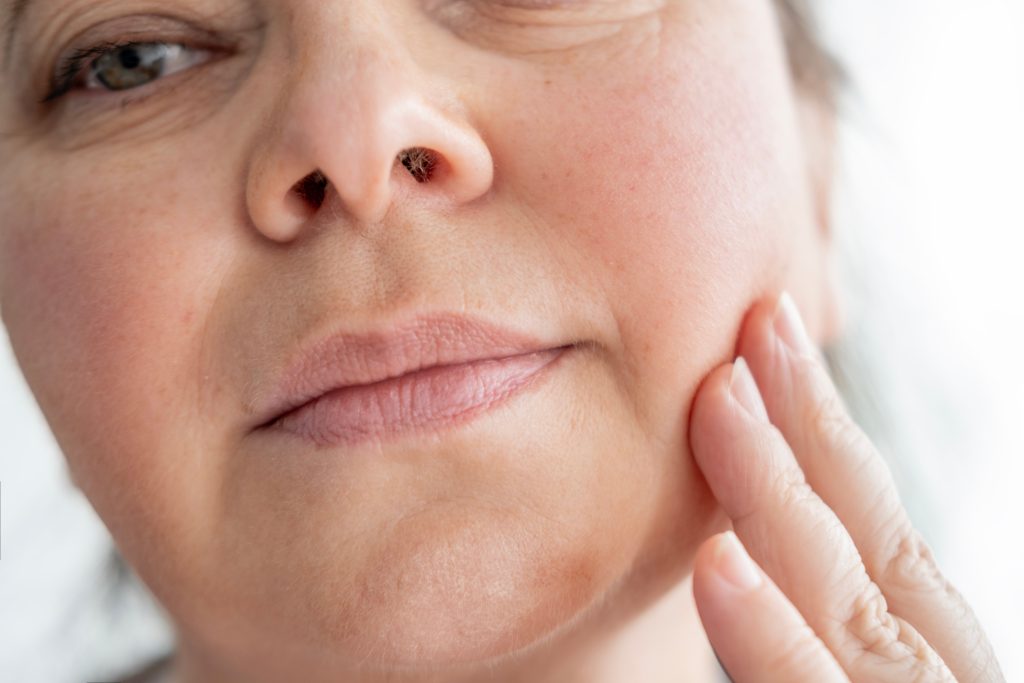
Jowls are among the most common concerns people mention as they notice changes in their face. That drooping skin along the lower jaw and around the chin has a way of shifting your whole appearance – even when you feel vibrant and well. The reassuring truth is that jowls are a well-understood part of the aging process, and for patients who want a lasting solution, a facelift remains the gold-standard procedure for correcting them. Understanding why they form in the first place makes it much easier to choose the right path forward.
Your skin’s ability to bounce back is largely thanks to two proteins: collagen and elastin. Collagen gives skin its structure and firmness, while elastin allows it to stretch and then return to its original shape. Together, they keep the skin smooth and taut.
Starting in your mid-20s, and becoming noticeably visible by your 40s and 50s, the body produces less collagen and elastin. As levels drop, the skin gradually loses its ability to hold itself up against gravity. The lower face is especially vulnerable. The skin here is thinner than in other areas, and the muscles and ligaments that once held everything in place start to loosen over time.
The result? The fullness and definition that once sat high on the cheekbones slowly migrates downward, pooling along the jawline as the jowls we recognize so easily in the mirror.
While aging is inevitable, certain lifestyle factors can accelerate the process considerably. Sun exposure is among the most significant – UV radiation breaks down collagen fibers faster than time alone. People who spend a great deal of time outdoors without sun protection often notice more pronounced facial aging earlier than their peers.
Other contributors include:
Smoking: Nicotine constricts blood vessels, reducing the oxygen and nutrients that reach skin cells. It also triggers enzymes that directly break down collagen.
Significant weight fluctuations: Repeated stretching and contraction of the skin weakens its elasticity over time.
Poor diet and dehydration: Skin that isn’t nourished from the inside tends to age faster on the outside.
Chronic stress: High cortisol levels are linked to accelerated collagen breakdown.
Genetics: Your family history plays a significant role in when and how prominently jowls develop.
Once jowls have formed, reversing them takes more than a good skincare routine. There are several paths forward, ranging from non-invasive maintenance to surgical correction. The right option depends on how significant the jowling is, what your goals look like, and how long you want results to last.
Non-surgical options have become increasingly sophisticated, and for patients in the early stages of jowl formation, they can make a meaningful difference. Radiofrequency treatments like Thermage and focused ultrasound devices like Ultherapy use energy to stimulate collagen deep within the skin. Thread lifts use tiny dissolvable sutures to gently lift sagging tissue. These approaches work best when jowls are mild, and the skin retains some underlying elasticity to respond to.
The key limitation is that results are temporary. Most non-surgical treatments last between one and two years, and they work by encouraging the body’s own healing response – a process that has natural limits, especially as aging continues.
Dermal fillers, such as hyaluronic acid, are a popular option for addressing early jowls. By adding volume to the chin, jawline, and pre-jowl area, a skilled injector can create the illusion of a more defined jawline. Fillers are quick, require no downtime, and can look very natural.
That said, fillers work by camouflaging jowls rather than lifting them. For moderate to significant jowling, fillers alone are unlikely to provide the definition most patients are looking for.
Laser resurfacing treatments remove damaged outer layers of skin while stimulating collagen production below the surface. Fractional CO2 and erbium lasers are commonly used around the lower face and neck to improve tone, texture, and mild laxity. These treatments are most effective as part of a broader plan – combined with a surgical lift, or used as a long-term maintenance tool afterward.
For patients with moderate to significant jowling, a facelift is the most effective and longest-lasting solution available. Unlike topical or injectable treatments, a facelift physically repositions the underlying tissue rather than just tightening the skin on top.
During the procedure, a surgeon carefully lifts and repositions the deep layer of muscle and connective tissue called the SMAS (superficial musculoaponeurotic system). This is what creates the lifted result that patients love. The skin is then re-draped smoothly over this restored foundation, and excess skin is removed. The jawline is redefined from the inside out.
A well-performed facelift does not simply tighten; it restores the facial architecture that has gradually shifted with age. Results typically last ten years or more, and most patients say they simply look like a younger, more refreshed version of themselves.
Recovery varies by patient, but most people feel comfortable returning to normal activities within two weeks. Bruising and swelling are completely expected and resolve gradually, with final results becoming fully visible around the three-month mark.
Many patients choose to combine their facelift with a neck lift, and for good reason. Jowls rarely exist in isolation – the same aging process that creates them also affects the neck, causing banding, loose skin, and the soft fullness under the chin that often develops alongside jowling.
A neck lift addresses this lower portion by tightening the neck muscles (the platysma) and removing excess skin. When combined with a facelift, the two procedures create a seamlessly rejuvenated lower face and neck, which is one of the most comprehensive and satisfying outcomes in aesthetic surgery. The transition between the two areas looks completely natural because it is treated as a unified canvas.
Beyond the main options, there are several additional approaches that fall between non-invasive treatments and full surgery:
Kybella: An injectable treatment that dissolves fat beneath the chin to sharpen the submental area and improve jawline definition.
FaceTite: A minimally invasive radiofrequency device that delivers energy directly under the skin for more significant tightening than surface-level treatments can achieve.
Morpheus8: A combination of microneedling and radiofrequency that remodels collagen in deeper skin layers with minimal downtime.
These options are worth exploring with your provider if you want more impact than fillers or surface treatments, but are not yet considering a surgical procedure.
While the aging process cannot be stopped entirely, protecting and supporting your skin can meaningfully slow jowl progression. Consistent daily sunscreen use is one of the most powerful habits you can build – wearing SPF 30 or higher every day significantly reduces UV-related collagen breakdown over time.
A few other practices that support skin health over the long term:
Stay well-hydrated and maintain a nutrient-rich diet focused on antioxidants and lean proteins
Avoid drastic weight cycling that repeatedly stretches and shrinks the skin
Quit smoking, or never start – the benefits for skin are significant and visible
Use medical-grade skincare products with retinol, peptides, and growth factors
Stay consistent with in-office maintenance treatments as recommended by your provider
The earlier you establish a prevention and maintenance plan, the better positioned you will be to extend the results of any treatment, surgical or otherwise.
If sagging skin along your jaw has been affecting how you feel about your appearance, now is a great time to take the next step. Dr. Sean Freeman, a double board-certified facial plastic surgeon with decades of experience, specializes in procedures that lift sagging skin, restore volume, and work with the underlying facial muscles to create results that look genuinely natural. Whether your concerns stem from the natural loss of skin firmness, changes to your facial structure, or years of sun damage, Dr. Freeman takes the time to understand your unique anatomy and goals before recommending anything. His approach is never one-size-fits-all – every patient receives a personalized plan that addresses jowl appearance, improves overall facial contour, and creates a more defined jawline that complements their features.
During your consultation, you will have the opportunity to explore all available treatment options and learn exactly how each one can help you achieve a more youthful contour you feel confident in. Reach out today to schedule your consultation. Take the first step toward looking as energized as you feel.
Understanding why skin ages the way it does puts you in a much stronger position to act. As skin loses its structural support due to reduced collagen production and weakened elastin fibers, the lower face begins to show its effects – the corners of the mouth shift downward, the lower lip loses its crispness, and familiar fullness shifts toward the jaw, creating jowls. Whether you have a genetic predisposition to develop jowls early or are simply noticing the gradual effects of time and sun exposure, the process is the same: skin laxity increases, lost volume leaves the midface hollow, and facial sagging follows.
Supporting your skin from the inside out through a healthy lifestyle, staying hydrated, and eating foods rich in vitamin C can slow the early development of these changes. Facial exercises and facial fillers can also play a supporting role in keeping the face looking its best between more comprehensive treatments.
But when sagging jowls, a double chin, or significant skin laxity have already taken hold, these measures alone are rarely enough to treat jowls in a meaningful, lasting way. Addressing jowls at their source is what surgical treatment is designed to do. A facelift, with or without complementary procedures, remains the most reliable way to correct facial sagging and restore an attractive appearance that reflects how you truly feel.
Dr. Sean Freeman is here to guide you through every option with honesty, expertise, and care. Your consultation is the beginning of a plan built entirely around you.
Dr. Sean Freeman