
A brow lift should help you look more rested and refreshed – not permanently surprised. The key to avoiding that overly raised, “startled” appearance is controlling where and how much the brow is lifted. Our signature technique – Segmental Endoscopic Brow Lift – uses a targeted approach, allowing different areas of the brow to be adjusted independently rather than lifting the entire forehead as one unit. This creates a more natural brow position while preserving the facial expression that makes you look like yourself.
The position and shape of your eyebrows have a major effect on how your face communicates emotion. Even small changes can make you appear more alert, worried, angry, or surprised.
With age, the brow can gradually descend due to changes in the skin, soft tissues, and muscles, as well as the effects of gravity. The outer brow may become heavier, while the skin above the upper eyelids can begin to look hooded. Forehead lines and frown lines may also become more noticeable.
When someone wants to correct these changes, it can be tempting to think that simply lifting the brows higher will create a more youthful appearance. But higher does not necessarily mean better.
If too much of the brow is lifted, or if the entire brow is elevated uniformly, the result can look unnatural. The forehead may appear tight, and the eyebrows may sit higher than they naturally would when you are relaxed. That is why precision matters.
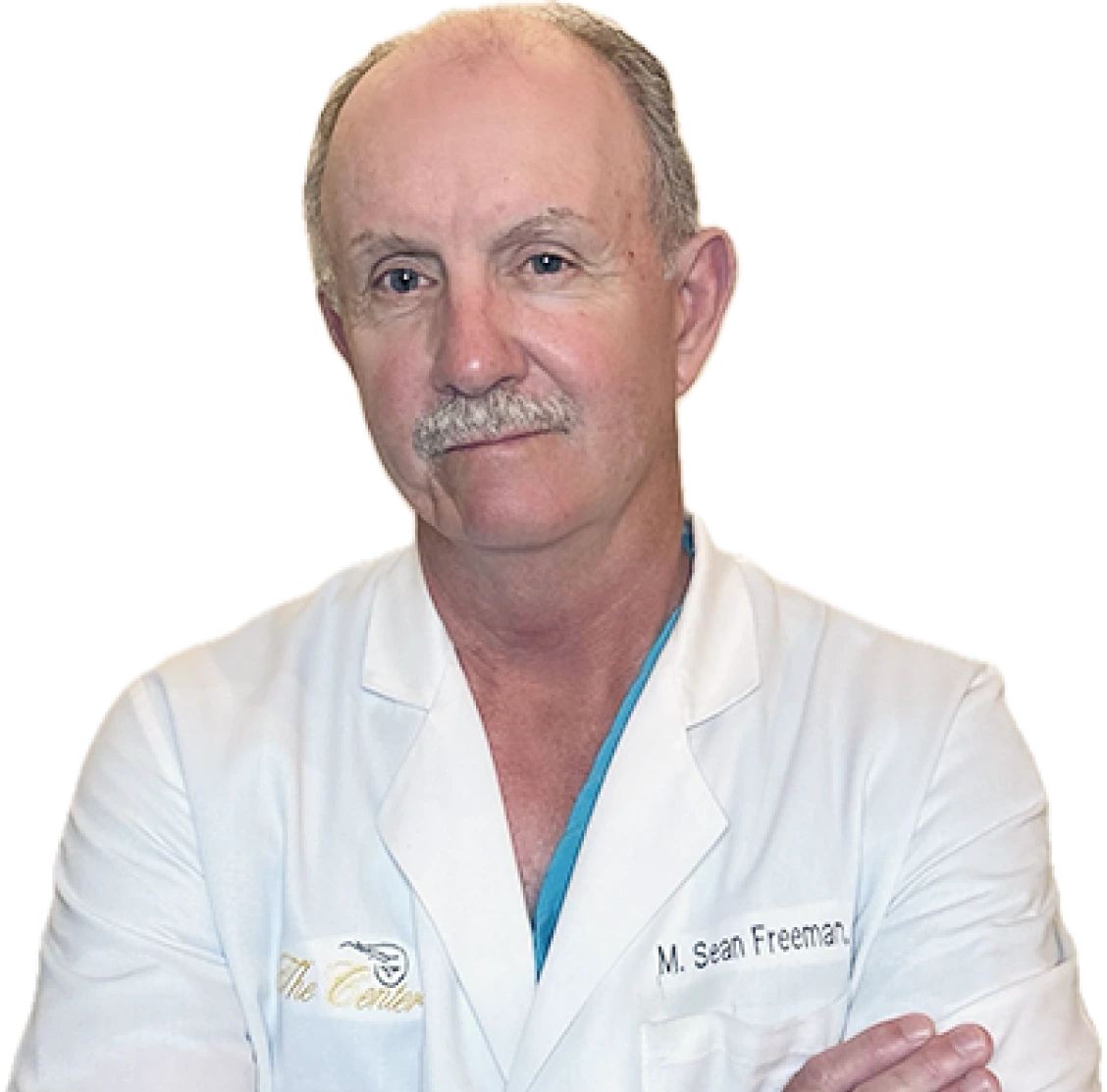
The Segmental Endoscopic Brow Lift was developed by Dr. Sean Freeman at Only Faces as a technique to treat different portions of the brow based on each patient’s anatomy and degree of brow aging. Instead of treating the forehead as one large area, the approach divides the brow into segments that can be adjusted independently.
Think of it like tailoring a suit. A one-size-fits-all approach may make changes everywhere, but a tailored approach adjusts each area according to what actually needs attention.
With the segmental approach, a surgeon can determine whether the:
Outer brow needs more elevation
Central brow needs a smaller adjustment
Inner brow needs to remain relatively unchanged
Two sides need different amounts of correction because of asymmetry
This level of control helps preserve the natural curve and character of the eyebrows rather than creating a uniformly high brow.
You can learn more about the procedure on our Segmental Endoscopic Brow Lift page.
One of the biggest reasons people worry about looking “surprised” after a brow lift is the idea that the entire forehead will be lifted.
The segmental technique takes a different approach. If the main concern is drooping at the outer brow, for example, the surgeon can focus on that area rather than automatically elevating the entire brow.
This matters because different parts of the brow contribute differently to facial expression.
A more targeted lift can help:
Open up the eye area
Reduce the appearance of a heavy or drooping brow
Restore a natural brow arch
Improve uneven brow positioning
Soften a tired, sad, or stern appearance
Maintain a relaxed and natural facial expression
The goal is not to make the eyebrows dramatically higher. It is to restore them to a position that fits the patient’s face.
The word “endoscopic” refers to the use of a small camera, called an endoscope, during surgery. The camera is inserted through small incisions hidden within the hairline, allowing the surgeon to see the underlying structures on a monitor while making carefully planned adjustments.
This approach avoids the need for a long continuous scalp incision used with some traditional brow lift techniques.
At Only Faces, the procedure typically involves several small incisions behind the hairline. The surgeon can then release selected muscles and tissues that contribute to brow descent and secure them in their new position.
The technology itself is important, but the surgical planning behind it is just as important. An endoscope provides visualization – it does not replace the need for an individualized treatment plan.
A natural brow is not perfectly straight, and it does not sit at exactly the same height from the inner corner to the outer edge.
For many people, the outer portion of the brow naturally sits somewhat higher than the inner portion. Changes in that relationship can alter the way the entire face looks.
A good brow lift, therefore, considers more than just wrinkles or drooping skin. It considers proportion, symmetry, facial structure, and expression.
Dr. Freeman describes five categories of brow lifts based on factors such as the degree of brow aging and individual anatomy. Our practice also offers an asymmetrical brow lift when one brow sits lower than the other.
This individualized planning is particularly relevant for patients with noticeable brow asymmetry. Raising both sides by exactly the same amount would not necessarily make them look more even.
Almost nobody has perfectly symmetrical eyebrows. However, aging can make an existing difference more noticeable.
One brow may naturally sit lower, or one side may experience more tissue descent than the other. If a surgeon treats both sides identically, that asymmetry may remain. The segmental approach allows each side to be considered independently when appropriate.
The objective is not mathematical perfection. It is creating a balanced appearance that looks natural when the face is at rest and during normal expression.
A successful brow lift should not announce that you have had surgery.
Instead, people may simply notice that you look:
More rested
More open around the eyes
Less tired
More refreshed
More balanced
The forehead should still look like a forehead, and your eyebrows should still move and contribute to normal facial expression.
Of course, every surgical result is individual. Your anatomy, skin quality, brow position, muscle activity, and degree of aging all affect what can realistically be achieved.
A consultation is the best way to determine whether a brow lift makes sense for your concerns. You may be a candidate if you are bothered by brow descent, forehead lines, frown lines, upper eyelid heaviness, or an appearance that makes you look more tired or stern than you feel.
The important question is not simply, “How high should my brows be?”
It is, “What brow position looks natural for my face?”
That distinction can make a meaningful difference in the surgical plan.
At Only Faces, Dr. Sean Freeman focuses exclusively on facial surgery and has developed and refined the Segmental Endoscopic Brow Lift over many years. Our practice evaluates the degree of brow aging and individual facial characteristics when determining which approach is appropriate.
The purpose of a brow lift is not to make you look permanently wide-eyed. It is to address the changes that have occurred with aging while maintaining the facial features and expressions that are uniquely yours.
The Segmental Endoscopic Brow Lift helps support that goal by giving the surgeon greater control over which portions of the brow are lifted and how much correction each area receives. By avoiding a one-size-fits-all elevation, the technique is designed to create a more balanced result and reduce the risk of the overly raised, “surprised” appearance that patients often want to avoid.
For someone considering brow rejuvenation, that precision can be reassuring. The goal is not simply a higher brow. It is a brow that looks right for your face – refreshed, balanced, and natural.
About the Author
Dr. Sean Freeman MD, FACS
September 21, 2026
