Your nose is one of the most defining features of your face – and if you’ve been thinking about rhinoplasty, you already know how much the right change can matter. You may have come across the debate around open vs closed rhinoplasty and wondered which one applies to you. For most patients seeking significant reshaping of the nasal tip, bridge, or overall structure, open rhinoplasty offers surgeons the greatest precision and control. But if your goals are more limited – a minor refinement here or there – the closed approach may serve you just as well with a faster recovery. The right technique depends entirely on your anatomy, your goals, and your surgeon’s recommendation.
Home » Open vs Closed Rhinoplasty: Which Technique Is Right for You?
Both approaches achieve the same fundamental goal: reshaping the nose to improve its appearance, function, or both. The difference lies in how your surgeon accesses the underlying structures.
In open rhinoplasty, a small incision is made across the columella – the narrow strip of skin between your nostrils. This allows the surgeon to lift the skin and work with a direct, unobstructed view of the nasal framework underneath.
In closed rhinoplasty, all incisions are made entirely inside the nostrils. Nothing is visible on the outside. The surgeon works through these internal openings to reshape cartilage and bone.
Both techniques are well-established and widely performed. Neither is inherently superior – what matters most is which one is the right fit for what you need.
The open rhinoplasty procedure is the more commonly recommended approach for complex cases. Because the surgeon has a full, direct view of the nasal structures, it allows for more precise modifications and more predictable outcomes.
This technique is typically recommended when:
Significant reshaping of the nasal tip is needed
The nose requires structural support, such as cartilage grafting
Previous rhinoplasty results need to be corrected (revision rhinoplasty)
Asymmetries or functional issues like a deviated septum are being addressed alongside cosmetic changes
Multiple areas of the nose require simultaneous work
The trade-off is a slightly longer recovery and a small scar on the underside of the nose. In skilled hands, this scar fades considerably over several months and becomes very difficult to notice. Most patients agree it’s a worthwhile exchange for the precision it allows.
The closed technique avoids external incisions entirely, which means no visible scarring and a somewhat faster recovery. Swelling tends to resolve more quickly, and many patients feel comfortable returning to their routines sooner.
This approach works best for patients with straightforward goals – smoothing a bump on the bridge, making subtle adjustments to the nasal width, or minor tip refinements that don’t require the surgeon to restructure cartilage significantly.
The limitation of the closed technique is access. Working through small internal incisions restricts the surgeon’s field of view and limits the complexity of changes that can be made accurately. For this reason, many board-certified surgeons prefer the open approach for anything beyond a minor adjustment.
If your goals are modest and your nasal anatomy is cooperative, the closed technique can produce excellent results with less downtime.
There’s no universal answer – and that’s actually a good thing. It means your treatment plan can be tailored to exactly what you need, rather than a one-size-fits-all solution.
Here are some of the key factors your surgeon will consider when recommending an approach:
The complexity of your goals. Subtle changes can often be achieved with the closed method. More extensive reshaping typically calls for an open approach.
Your nasal anatomy. Some noses present more anatomical challenges than others. Thick skin, asymmetrical cartilage, or previous surgeries can make direct visualization more important.
Whether revision surgery is involved. Secondary rhinoplasty almost always requires the open approach due to the presence of scar tissue from prior procedures.
Functional concerns. If breathing difficulties are part of the picture, such as a deviated septum or collapsed nasal valve, the added access of open rhinoplasty is usually necessary.
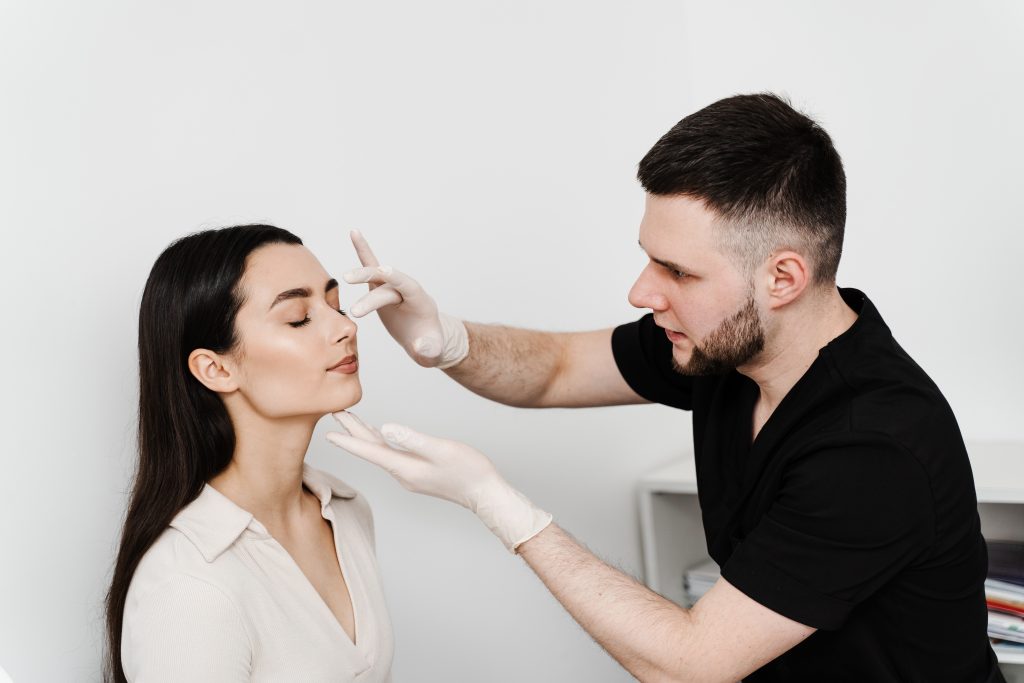
The best way to determine what’s right for you is a thorough, one-on-one consultation. A skilled surgeon won’t push you toward one technique or the other based on convenience – they’ll take the time to examine your nose, listen to your goals, and give you an honest recommendation.
Understanding the technique is just one piece of the conversation. When you meet with a plastic surgery specialist for rhinoplasty, there’s a lot more to discuss – and a good consultation should leave you feeling genuinely informed and confident in your plan.
Come prepared to talk about:
Your specific goals. Bring photos if it helps illustrate what you’re hoping to achieve.
Your medical history. Previous nasal injuries, surgeries, or breathing concerns are all relevant.
Recovery expectations. Ask your surgeon what the first two weeks will realistically look like, and what your nose will look like at one month, six months, and a year.
Before-and-after photos. Reviewing your surgeon’s previous rhinoplasty results – specifically using the technique being recommended for you – gives you a realistic picture of what’s possible.
The most important thing is to choose a surgeon who is experienced specifically in rhinoplasty. It’s one of the most technically demanding procedures in facial surgery, and experience matters enormously. Look for a board-certified surgeon with a strong portfolio of nasal work, and don’t hesitate to ask how many rhinoplasties they perform each year.
When it comes to rhinoplasty surgery, understanding the key differences between your options is what makes all the difference in feeling confident about moving forward. Whether you’re considering a nose job to address a nasal hump, improve the underlying nasal structure, or refine the soft tissue around the tip, the approach your surgeon recommends will shape your entire experience – from the operating room to the mirror.
Closed surgery, which keeps all incisions inside the nostrils, typically means less swelling and a shorter recovery time, making it an appealing option for minor refinements. The open technique, on the other hand, involves a small incision across the nasal columella that gives your surgeon a clearer view of the structures beneath – an advantage that’s often essential for more complex nasal surgery. Both paths can lead to beautiful results when performed by an experienced surgeon.
The goal of this post has been to give you the foundation to have a more informed, productive conversation with your surgeon – so you can walk into that consultation ready to make a truly informed decision about your care.
Dr. Sean Freeman