
When considering a brow lift to address sagging eyebrows and forehead lines, the main difference between an endoscopic and a traditional brow lift lies in the surgical approach: an endoscopic brow lift uses several small, hidden incisions and a camera, while a traditional lift typically involves a longer incision. Understanding the distinctions between these two techniques is essential for choosing the right option for your needs.
A brow lift, also known as a forehead lift, is a surgical procedure designed to elevate drooping eyebrows and smooth deep forehead lines. As we age, our brow tissues descend due to gravity and weakening support structures, creating a tired, stern, or frustrated appearance. This procedure restores a more youthful brow position while addressing horizontal forehead lines and vertical frown lines between the eyebrows.
Modern brow lift surgery offers multiple techniques tailored to individual anatomy and goals. At Only Faces, Dr. Sean Freeman employs five distinct brow lift variations, informed by his published research and over 30 years of experience. Every brow lift is tailored to the individual, ranging from minimal intervention for mild sagging to comprehensive approaches for advanced brow ptosis.
The endoscopic approach represents a significant advancement in facial plastic surgery, offering a less invasive way to achieve rejuvenation.
Dr. Freeman pioneered the Segmental Endoscopic Brow Lift, publishing his technique in 2021 after 15 years of refinement. This approach uses 3-5 small incisions hidden within the hairline, each less than an inch long.
Benefits of the endoscopic approach include:
Minimal scarring, hidden in the hair
Reduced numbness and scalp sensation changes
Shorter operating time
Less post-operative swelling
Preservation of natural hairline position
Faster recovery compared to traditional methods
Recovery from an endoscopic lift is generally quicker than from a traditional lift:
Return to desk work within 7-10 days
Minimal bruising concentrated around the eyes
Temporary mild forehead tightness
Small bandages removed after 1-2 days
Sutures removed at 10-14 days
Most swelling resolves within two weeks, though subtle improvements continue for several months. Discomfort is minimal and easily managed.
The results of an endoscopic brow lift are long-lasting, providing a natural elevation lasting 10-15 years in most patients. By repositioning the underlying structures, it effectively turns back the clock, helping patients look more rested and refreshed while avoiding the “surprised” look. Patients maintain normal forehead movement and facial expressions.
While endoscopic techniques are often preferred, a traditional or full brow lift may be recommended in specific cases.
A traditional brow lift involves a longer incision. This incision can be placed along the hairline, behind it, or in some cases, directly above the eyebrows.
At Only Faces, Dr. Freeman reserves these approaches for patients with:
Very significant brow sagging or high hairline
Heavy, thick brow skin
Deep horizontal forehead wrinkles
Significant brow asymmetry
Previous unsuccessful brow surgery
Recovery from traditional brow lift surgery involves:
Initial head wrap for 24-48 hours
Drain removal at 1-2 days (if used)
Return to work after 2-3 weeks
Temporary numbness lasting several months
Gradual scar fading over 6-12 months
More significant swelling than endoscopic procedures
This technique can produce dramatic and durable results that last 15-20 years. When performed by an experienced facial surgeon, the scar is carefully placed to be as inconspicuous as possible, resulting in a smoother and more elevated forehead. The trade-off includes a longer scar and an extended recovery period.
When evaluating the two options, it’s helpful to compare them across several key factors.
Endoscopic: Minimally invasive, using 3-5 small incisions hidden in the hair
Traditional: More invasive, using one long continuous incision at or behind the hairline, or incisions directly above the brows
Both are effective, but the results differ. The endoscopic lift offers a more subtle, natural repositioning. Dr. Freeman’s Segmental Endoscopic Brow Lift further refines this technique by enabling targeted adjustments to specific areas of the brow for a truly customized and balanced outcome. A traditional lift provides a more powerful, global lift of the entire forehead suitable for severe cases.
Downtime differs significantly between techniques:
Endoscopic: 7-10 days for work, 3-4 weeks for light exercise
Traditional: 2-3 weeks for work, 6 weeks for exercise
Endoscopic: 3-5 tiny scars well-hidden within the hair
Traditional: Long scar across scalp or at hairline; scars directly above brows
Dr. Freeman’s meticulous closure techniques minimize scarring with either approach.
Both procedures require general anesthesia or deep sedation:
Endoscopic: 1-2 hours surgical duration
Traditional: 2-3 hours surgical duration
Numbness patterns vary between techniques:
Endoscopic: Minimal, temporary around incisions
Traditional: More extensive, may last 6-12 months
Most patients regain normal sensation regardless of technique.
A key advantage of Dr. Freeman’s segmental endoscopic method is the preservation of natural facial expression. The goal is to look refreshed, not “done.”
Ideal endoscopic candidates have:
Mild to moderate brow descent
Good skin elasticity
Minimal forehead wrinkles
Realistic expectations
Traditional techniques suit patients with:
Severe brow sagging
Heavy, thick skin
Deep forehead furrows
Need for maximum lifting
Specific anatomical features
Your desired outcome is the most important factor. Patients seeking subtle rejuvenation often prefer endoscopic methods, while those desiring dramatic transformation may need traditional approaches. During consultation, Dr. Freeman uses imaging to demonstrate potential outcomes.
Individual anatomy determines technique suitability:
Hairline position affects incision placement
Skin thickness influences lifting capacity
Brow shape guides lift vectors
Forehead height impacts approach selection
The strength of the brow muscles plays a role
Dr. Freeman’s unique five-level classification system accounts for these variations.
Certain factors influence technique choice:
Previous forehead surgery
Healing characteristics
Medical conditions affecting anesthesia tolerance
Medications affecting bleeding
A thorough review of your medical history during consultation ensures the chosen procedure is safe and appropriate.
Ultimately, the choice between an endoscopic and a traditional brow lift is made during your personal consultation. Dr. Sean Freeman specializes exclusively in facial procedures and has dedicated his 30-year career to innovating in this field. During your consultation at Only Faces, Dr. Freeman examines your facial structure, discusses your goals, and recommends the optimal approach.
Many patients combine their brow lift with upper blepharoplasty or facelift surgery for comprehensive facial rejuvenation. Dr. Freeman’s facial plastic surgery expertise ensures harmonious and natural-looking results.
Choosing between brow lift techniques requires professional guidance. While endoscopic lifts offer benefits like smaller incisions and faster recovery, the most important factor is matching the right procedure to the patient. With his pioneering Segmental Endoscopic Brow Lift based on decades of experience and published research, Dr. Freeman provides a level of customization that moves beyond a simple choice, ensuring each patient at Only Faces receives a result that is both beautiful and uniquely their own.
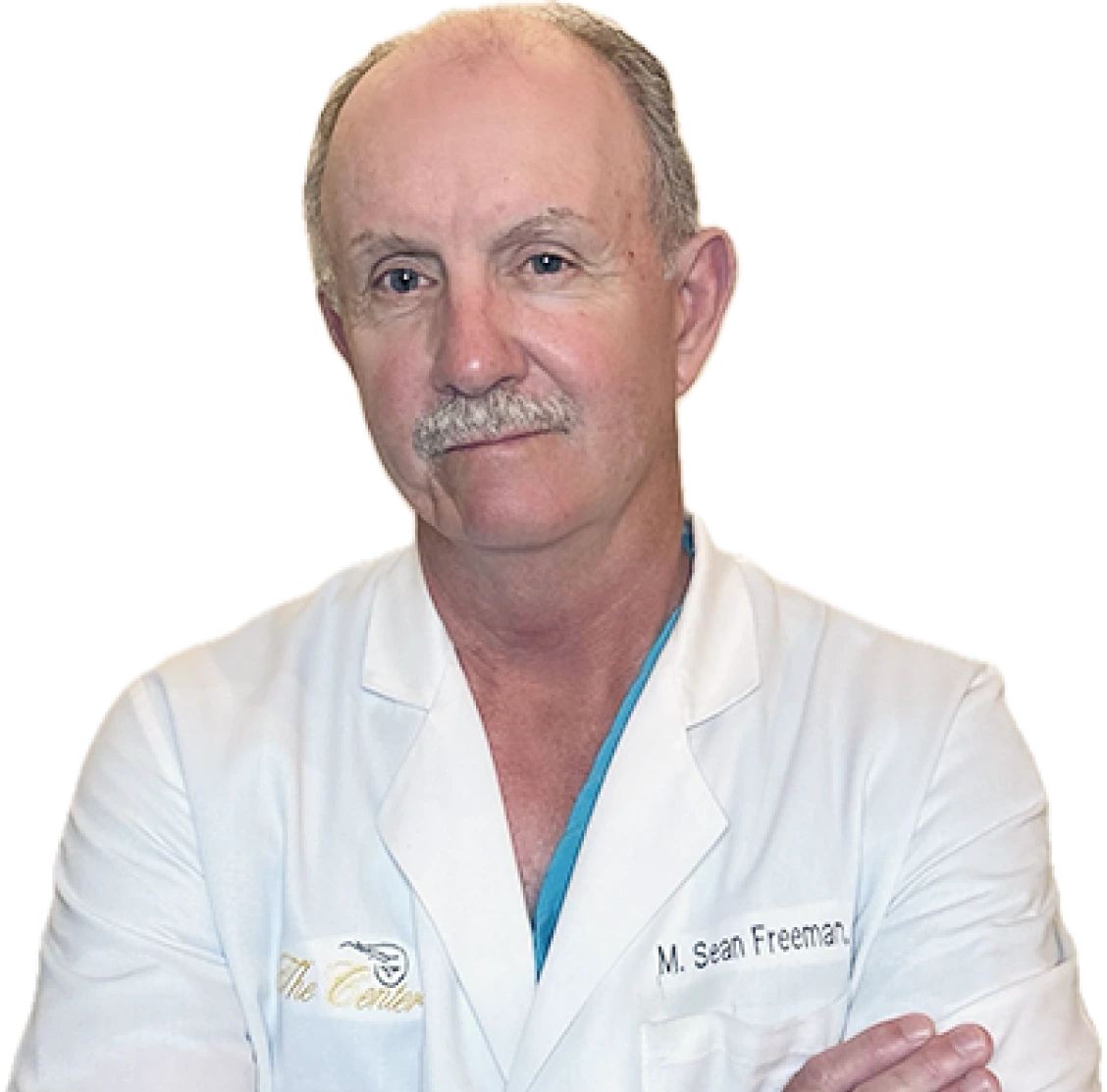
About the Author
Dr. Sean Freeman MD, FACS
May 29, 2026
